
According to the Florida Department of Highway Safety and Motor Vehicles, more than 381,000 motor vehicle crashes occurred in Florida in 2024, leaving hundreds of thousands of people injured and uncertain about their legal options.
The same crash report data confirms that Florida has consistently recorded over 1,000 crashes every single day for years, with 2024 averaging approximately 1,799 crashes per day.
If for instance you were rear-ended on I-95 in Miami, slipped on a wet floor at a Publix in Orlando, or suffered injuries in a boating accident off Fort Lauderdale, you are now navigating one of the most complex personal injury legal systems in the United States.
Florida is not like other states. Its no-fault insurance system, its recently revised comparative negligence rule, and its unique statutes governing emises liability, medical malpractice, and wrongful death all operate differently from the rest of the country. A general internet search about personal injury law will frequently mislead you if it does not specifically address Florida.
This guide covers everything you need to know: the laws, the deadlines, the types of damages you can recover, how fault works, and how to protect yourself from costly mistakes.
Personal injury law is the area of civil law that allows an injured person to seek financial compensation from the party responsible for causing their harm. Unlike criminal law, where the government prosecutes a defendant, a personal injury case is brought by the injured individual, known as the plaintiff, against the party at fault, known as the defendant.
At the heart of almost every personal injury case is the legal theory of negligence. To succeed on a negligence claim, you must prove four elements.
Duty of care looks different depending on the situation. A driver owes a duty to other motorists and pedestrians to follow traffic laws and drive attentively. A property owner owes a duty to visitors to maintain reasonably safe premises. A doctor owes a duty to patients to meet the accepted standard of care within their medical specialty.
Florida applies its own statutes, case law, and procedural rules to personal injury claims. While the concept of negligence is universal, how Florida defines fault, limits damages, governs insurance claims, and sets deadlines differs significantly from other states, and failing to understand those differences can cost you your right to recover.
Florida has made several significant changes to its personal injury laws in recent years. If you rely on outdated information, you could lose your case before it even starts.
The Florida personal injury statute of limitations is the deadline by which you must file a lawsuit. In 2023, Florida reduced the statute of limitations for negligence-based personal injury claims from four years to two years under Florida Statutes Section 95.11. This is one of the most important and recent changes in Florida personal injury law.
If you were injured on or after March 24, 2023, you generally have two years from the date of the accident to file your lawsuit in civil court. Missing this deadline almost always results in your case being permanently dismissed, regardless of how strong your evidence is.
There are exceptions. If your injury involves a government entity, you typically have just three years to provide written notice of the claim under Florida’s sovereign immunity statute, and additional procedural requirements apply.
In medical malpractice cases, the statute is two years from when you discovered, or reasonably should have discovered, the injury, with an absolute four-year cap in most circumstances.
For minors, the clock generally does not begin running until the child turns 18. Fraud or concealment by the defendant can also toll the deadline in limited situations.
Given how short these windows are, consulting a Florida personal injury attorney as early as possible after an injury is not optional. It is critical.
Florida previously operated under a pure comparative negligence system, which allowed injured parties to recover compensation even if they were 99 percent at fault. That changed in 2023. Under the Florida comparative negligence rule now in effect, Florida follows a modified comparative negligence standard with a 51 percent bar.
This means that if you are found to be 51% or more at fault for your own injury, you are completely barred from recovering any compensation. If you are 50 percent or less at fault, you can still recover damages, but your award is reduced by your percentage of fault.
For example, imagine you were injured in a car accident on U.S. Route 1 in Broward County. The jury determines your total damages are $100,000. If the jury finds you 30 percent at fault for failing to signal before changing lanes, your recovery is reduced to $70,000. If the jury finds you 55 percent at fault, you recover nothing. This rule makes how fault is argued and established in your case enormously consequential.
Florida is one of only a handful of states that operates under a no-fault auto insurance system. Under this system, after a car accident, your own insurance pays your initial medical bills and lost wages regardless of who caused the crash, through what is called Personal Injury Protection (PIP) coverage.
Florida law requires all registered vehicle owners to carry a minimum of $10,000 in PIP coverage under Florida Statutes Section 627.736. PIP covers 80 percent of reasonable medical expenses and 60 percent of lost wages, up to the $10,000 limit. Crucially, you must seek initial medical treatment within 14 days of the accident to be eligible for PIP benefits. A delay in treatment is not just a health risk. It is a legal risk.
PIP is not meant to fully compensate you for a serious injury. It is a floor, not a ceiling. The no-fault system restricts your right to sue the at-fault driver unless your injuries meet the serious injury threshold defined under Florida Statutes Section 627.737.
To step outside the no-fault system and pursue a liability claim against the at-fault driver for non-economic damages like pain and suffering, your injuries must qualify as a significant or permanent injury.
Specifically, Florida law requires that you have suffered significant and permanent loss of an important bodily function, permanent injury within a reasonable degree of medical probability other than scarring or disfigurement, significant and permanent scarring or disfigurement, or death.
Soft tissue injuries alone typically do not meet this threshold. This is another reason why prompt and thorough medical documentation is essential from day one.
Florida has had a turbulent history with damage caps. Caps on non-economic damages in medical malpractice cases were struck down by the Florida Supreme Court in 2017 in the case of North Broward Hospital District v. Kalitan, which ruled that such caps were unconstitutional. As of now, Florida does not impose caps on non-economic damages in most personal injury cases, including auto accidents and premises liability.
Punitive damages, however, are capped under Florida Statutes Section 768.73 at three times the amount of compensatory damages, or $500,000, whichever is greater. In cases involving intentional misconduct, different limits may apply.
Beyond PIP, Florida requires drivers to carry $10,000 in property damage liability coverage. Florida does not require bodily injury liability coverage for most drivers, which means there is a substantial population of Florida drivers who legally operate vehicles with no coverage for injuries they cause to others.
This makes uninsured motorist (UM) coverage critically important for Florida residents. If you are hit by an uninsured driver, your own UM coverage may be your only source of compensation beyond PIP.
Here is what the process of personal injury lawsuit in Florida actually looks like.
Your first obligation after any injury is to your own health. But in Florida, getting medical care quickly also has direct legal consequences. Under the PIP system, you must receive treatment within 14 days to preserve your PIP benefits. Beyond that deadline, your insurer can lawfully deny your claim.
Medical records created close in time to the accident are also the most powerful evidence of causation. Waiting days or weeks to see a doctor gives insurance adjusters a powerful argument that your injuries were not serious or were caused by something other than the accident.
Evidence disappears quickly. Take photographs of the accident scene, your injuries, the hazard that caused a slip and fall, or the property damage from a car crash. Collect names and contact information of witnesses. Save all medical bills, prescription receipts, records of missed work, and any correspondence with insurance companies.
If your injury occurred at a business, ask whether there is surveillance footage and document the request in writing. Businesses routinely overwrite or destroy footage within days. Your attorney can send a spoliation letter to preserve this evidence, but only if they are involved early enough.
Report the accident to your own insurance company promptly. Be careful with what you say. Provide the basic facts but avoid speculating about fault, minimizing your injuries, or giving recorded statements without legal advice. Adjusters are trained to use your words against you.
If the accident involves a third party, that insurer will likely contact you. You are not required to give a recorded statement to the opposing party’s insurer, and doing so without counsel is rarely in your interest.
Most personal injury attorneys in Florida work on contingency, meaning you pay nothing unless they recover money for you. There is no financial risk to getting a consultation. An attorney can assess whether your injuries meet the serious injury threshold, identify all potential defendants, calculate the full value of your claim, handle negotiations, and file suit if necessary.
Take for instance a tourist is injured at a resort in Orlando. The liable parties might include the resort, a contractor who maintained the property, and a product manufacturer if defective equipment was involved. An experienced attorney identifies all these parties. An unrepresented claimant often settles for a fraction of the true value by dealing only with the most obvious defendant.
With Florida’s two-year statute of limitations for negligence claims now in effect, acting quickly is essential. Your attorney will typically attempt to negotiate a settlement before filing suit, but will file the lawsuit before the deadline regardless to preserve your rights. Once the deadline passes, there is almost no path to recovery.
Florida law allows injured parties to recover three broad categories of damages.
Economic damages compensate for your actual, quantifiable financial losses. These include past and future medical expenses, lost wages and earning capacity, rehabilitation costs, home care and assistance, and property damage. These are calculated based on documentation and, in cases involving long-term disability, expert economic projections.
Non-economic damages compensate for harms that are real but harder to quantify. Pain and suffering is the most well-known category, but it also includes emotional distress, loss of enjoyment of life, loss of consortium for a spouse, and mental anguish. In Florida, non-economic damages in most personal injury cases are not subject to a statutory cap following the 2017 Florida Supreme Court ruling, though insurance policy limits can still restrict what is practically recoverable.
PIP covers only a portion of your economic damages and provides nothing for pain and suffering. To recover non-economic damages from the at-fault party, your injuries must meet the serious injury threshold described above.
Punitive damages are available in Florida when the defendant’s conduct was intentional, malicious, or constituted gross negligence amounting to a conscious disregard for human life or safety. They are not meant to compensate the plaintiff but to punish the defendant and deter similar behavior.
Under Florida Statutes Section 768.73, punitive damages are capped at three times compensatory damages or $500,000, whichever is greater, with enhanced limits in cases of specific intentional misconduct.
Car accident claims in Florida are governed first by the no-fault PIP system. Your own insurer covers initial expenses up to $10,000. If your injuries meet the serious injury threshold, you can then bring a claim against the at-fault driver for the full scope of your damages beyond what PIP covers.
Florida’s high volume of traffic, tourist drivers unfamiliar with local roads, and frequent severe weather make multi-vehicle accidents common. Underinsured motorist coverage matters enormously here. If the at-fault driver carries only the minimum or no bodily injury coverage, your own UM/UIM policy may be your primary source of meaningful compensation.
Florida’s premises liability law governs injuries that occur on someone else’s property. Under Florida Statutes Section 768.0755, businesses that have actual or constructive knowledge of a dangerous condition on their floors have a duty to address it.
Constructive knowledge can be shown by proving the condition existed long enough that the owner should have discovered it through the exercise of ordinary care, or that the condition occurred regularly and was therefore foreseeable.
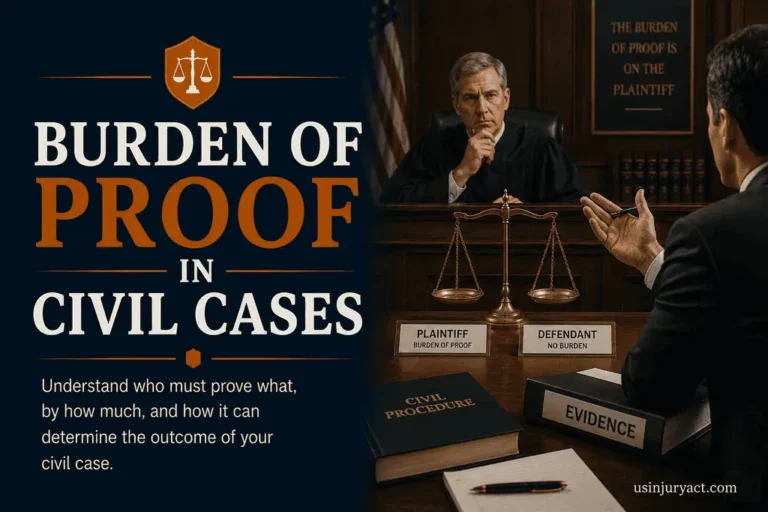
Florida changed this law in 2010, placing the burden of proof on the injured plaintiff rather than the property owner. That means you, not the business, must prove the business knew or should have known about the hazard.
Evidence like the absence of inspection logs, surveillance footage showing the condition had existed for a long time, or witness testimony about prior incidents can be decisive.
Most Florida employees injured at work are covered exclusively by Florida’s workers’ compensation system under Chapter 440 of the Florida Statutes. Workers’ comp provides medical benefits and a portion of lost wages but does not compensate for pain and suffering. In most cases, you cannot sue your employer in civil court.
However, if a third party contributed to your workplace injury, such as a subcontractor, equipment manufacturer, or property owner other than your employer, you can pursue a separate personal injury claim against that party. These third-party claims can be significantly more valuable because they allow recovery of full economic and non-economic damages.
Medical malpractice claims in Florida carry some of the most demanding procedural requirements of any personal injury case. Before filing suit, you must conduct a pre-suit investigation, obtain a verified written medical opinion from a qualified expert affirming that negligence occurred, and provide notice to the defendant under Florida Statutes Section 766.106. The defendant then has 90 days to respond.
The statute of limitations for medical malpractice is two years from when you discovered or should have discovered the injury, with an absolute cap of four years in most cases, and seven years in cases involving fraud, misrepresentation, or concealment. These cases require attorneys with specific experience in Florida medical malpractice, as the consequences of procedural errors are severe.
Florida follows strict liability for dog bites under Florida Statutes Section 767.04. This means you do not need to prove the owner knew the dog was dangerous. If a dog bites you while you are in a public place or lawfully on private property, the owner is liable for damages regardless of prior behavior.
Defenses do exist. Comparative negligence applies if you provoked the dog. If you were trespassing, strict liability may not apply. A posted warning sign saying “Bad Dog” can reduce the owner’s liability, though it does not eliminate it entirely.
Florida also imposes strict liability for non-bite injuries caused by dogs in certain circumstances, making Florida one of the more plaintiff-friendly states for dog injury cases.
When personal injury results in death, Florida’s Wrongful Death Act under Chapter 768 of the Florida Statutes governs who can file suit and what damages are available. Only the personal representative of the deceased’s estate may bring the action, but damages can be recovered on behalf of surviving family members including a spouse, children, and parents.
Surviving family members can claim the value of lost support and services, mental pain and suffering, and loss of companionship. The estate itself can claim lost prospective earnings, funeral expenses, and medical bills incurred before death.
Florida’s wrongful death statute has its own specific requirements and limitations that differ meaningfully from the general personal injury framework, making legal representation essentially mandatory.
Florida law applies statewide, but local conditions, court culture, traffic patterns, and industry-specific risks create real differences in how cases are investigated, litigated, and resolved.
Miami-Dade County handles one of the highest volumes of personal injury litigation in the state. High-speed highway accidents on I-95, SR-836, and the Palmetto Expressway are common, as are pedestrian accidents in densely populated neighborhoods. Miami also presents unique challenges involving international defendants, including tourists and foreign businesses, where service of process and jurisdictional issues can complicate claims. Tourism-related injuries involving cruise ships, hotels, and entertainment venues require attorneys familiar with maritime law and hospitality liability.
Orlando is theme park country, and the legal landscape reflects that. Attractions, resorts, and hospitality businesses in Orange and Osceola counties generate a specific category of premises liability and product liability claims. Theme park injury cases often involve sophisticated legal teams defending multi-billion dollar corporations. Additionally, the constant flow of rental car drivers unfamiliar with local roads contributes to a high rate of tourist-involved traffic accidents on Interstate 4 and surrounding corridors.
Tampa’s rapid growth has made it a hub for commercial trucking, construction, and suburban development. Trucking accidents on Interstate 75 and Interstate 4 involving commercial carriers are governed by both Florida law and federal motor carrier regulations. Construction site injuries are common in a fast-growing metro area. Tampa courts are also dealing with an increasing volume of rideshare accident cases involving Uber and Lyft, which present complex insurance layering questions.
As Florida’s largest city by land area, Jacksonville spans multiple judicial circuits and presents unusual challenges around geographic diversity. Rural highway accidents, urban pedestrian injuries, and port-related industrial accidents all arise within the same jurisdiction. Court culture and jury pools can vary depending on which part of the county the case is assigned to, which is one reason why local courtroom experience matters.
Fort Lauderdale and Broward County are among the busiest waterway areas in the country. Boating accidents, jet ski injuries, and marina-related premises liability cases arise regularly. Florida’s Boat Safety Act imposes specific standards of care on vessel operators, and boating under the influence (BUI) is prosecuted both criminally and civilly.
Coastal property liability, including beach access injuries and resort incidents, also presents a specialized area of practice that benefits from attorneys familiar with maritime and admiralty law nuances alongside Florida tort law.
Choosing the right attorney can determine whether you receive fair compensation or a fraction of what you deserve.
Most Florida personal injury attorneys work on a contingency fee agreement, meaning they receive a percentage of your recovery only if they win. Florida Bar rules govern these fees. Standard contingency fees typically range from 33 percent if the case settles before filing a lawsuit to 40 percent if the case goes to trial.
Some attorneys charge higher percentages for cases that reach appeal. Always ask for a written fee agreement before signing anything and understand what costs, such as expert fees, court costs, and deposition expenses, will be deducted from your recovery and when.
Most Florida personal injury attorneys offer a free consultation. Use it wisely. Ask how many cases similar to yours the attorney has handled, what percentage of their cases go to trial versus settle, how they communicate with clients throughout the case, and who specifically will be working on your file.
Avoid attorneys who guarantee specific results, pressure you into signing immediately, are difficult to reach after the initial meeting, or lack trial experience.
Some firms settle cases quickly and cheaply because going to trial requires resources and expertise they lack. Insurance companies know which law firms actually take cases to court and which ones do not, and they offer lower settlements accordingly.
A Florida personal injury lawyer who has tried cases in the specific courthouse where your case will be heard has real advantages. They know the judges, understand local jury tendencies, and have relationships with respected local expert witnesses. These factors matter more than a firm’s advertising budget.
Florida personal injury law is shaped by a combination of statutes, recent legislative changes, and court decisions that create a legal landscape unlike almost any other state.
The no-fault insurance system, the 2023 shift to modified comparative negligence, the two-year statute of limitations, and injury-type-specific requirements from medical malpractice pre-suit rules to wrongful death standing requirements all demand a precise understanding of Florida law.
The most important thing you can do after a serious injury in Florida is act quickly and get informed guidance.
Insurance companies protect their interests the moment an accident occurs. You deserve the same protection.
If you or a loved one has been injured in Florida, consult a licensed Florida personal injury attorney as soon as possible. Most offer free consultations, charge nothing unless they recover money for you.
Learn and Connect with the best injury attorneys based on specific injury type
Stay ahead with our resources on personal injury laws across the U.S.