Medical malpractice cases are among the most time-sensitive and procedurally demanding lawsuits in the American legal system.
If a doctor, hospital, or healthcare provider in Pennsylvania harmed you or a loved one through negligence, you are operating under strict legal deadlines that can permanently eliminate your right to compensation if you miss them.
The Pennsylvania medical malpractice statute of limitations sets the rules for when you must file, and understanding every dimension of those rules in 2026 is essential to protecting your rights.
So this article will explain the base filing deadline, the discovery rule and how it applies in Pennsylvania, certificate of merit requirements, special rules for minors and wrongful death, the foreign object exception.
You’ll also learn the practical steps you need to take to build a viable medical malpractice claim in Pennsylvania.
The Pennsylvania Medical Malpractice Filing Deadline
Pennsylvania’s medical malpractice statute of limitations is governed by 42 Pa. C.S. Section 5524(2), which sets a two-year limitations period for professional liability claims against healthcare providers.
In most cases, this two-year period begins on the date the negligent act or omission occurred, but because medical malpractice injuries are often not immediately apparent, Pennsylvania has developed rules around when this clock actually starts running.
The Discovery Rule in Pennsylvania Medical Malpractice
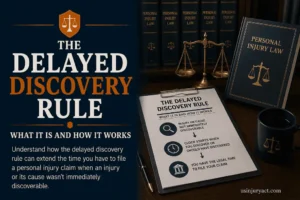
Pennsylvania applies the delayed discovery rule to medical malpractice claims, which means the statute of limitations does not necessarily begin on the date the malpractice occurred.
Instead, it begins when the patient knew or reasonably should have known that they suffered a harm that had a causal connection to medical treatment. This is a fact-specific determination that courts examine carefully.
The Pennsylvania Supreme Court has articulated this standard in landmark decisions including Pocono Intern. Raceway v. Pocono Produce and its progeny in medical liability cases. The rule protects patients who suffered latent injuries, meaning injuries that do not manifest symptoms until long after the negligent act.
Pennsylvania courts however holds that the clock begins when a reasonable person in the plaintiff’s position would have been placed on notice to investigate, not necessarily when the plaintiff obtained a formal expert opinion confirming malpractice.
Statute of Repose for Medical Malpractice in Pennsylvania
In addition to the two-year statute of limitations, Pennsylvania previously imposed a seven-year statute of repose that served as an absolute outer boundary on medical malpractice claims regardless of when the injury was discovered.
However, the Pennsylvania Supreme Court struck down this statute of repose in Yanakos v. UPMC in 2019, holding that it violated the Pennsylvania Constitution’s open courts provision as applied to plaintiffs who had no reasonable opportunity to discover their claims within the repose period.
As of 2026, Pennsylvania does not enforce a statute of repose for medical malpractice claims, which represents a significant expansion of patient rights in the commonwealth.
Special Rules and Exceptions That Change Your Deadline
Claims Involving Minor Patients
42 Pa. C.S. Section 5533(b) highlights that the statute of limitations for medical malpractice claims is tolled when the injured party is a minor. The two-year period does not begin to run until the minor reaches age 18.
This means a child who was harmed by medical negligence at age four has until age 20 to file suit. This protection is particularly important in birth injury cases, neonatal malpractice cases, and pediatric surgical errors that may not produce obvious symptoms until years after the initial harm.
It is worth noting, however, that this tolling provision applies to the minor’s own claims. A parent who seeks to bring a claim in their own name for medical expenses, emotional distress, or loss of consortium related to the child’s injury is subject to the standard two-year period from the date of injury or discovery, and is not protected by the minor tolling rule.
Wrongful Death from Medical Malpractice
When medical negligence results in a patient’s death, the family has a Pennsylvania medical malpractice wrongful death claim under 42 Pa. C.S Section 5524(2) and the Wrongful Death Act at 42 Pa. C.S. Section 8301.
The two-year statute of limitations for a wrongful death claim runs from the date of death.
The survival action, which allows the estate to pursue damages for pain and suffering and losses the deceased experienced before dying, is governed by the same two-year period running from the date of death or discovery, depending on the circumstances.
Both the wrongful death and survival claims are typically filed together.
The Foreign Object Exception
Pennsylvania recognizes a special exception to the statute of limitations when a foreign object, such as a surgical sponge, clamp, needle, or other instrument, is left inside a patient’s body during a procedure.
In these cases, the discovery rule applies powerfully because the patient may have no way of knowing a foreign object was retained until years later when it causes pain, infection, or other complications.
Pennsylvania courts have been receptive to foreign object claims filed well outside the standard two-year window when the plaintiff can demonstrate the object was not and could not reasonably have been discovered earlier.
Fraudulent Concealment by Healthcare Providers
If a hospital, physician, or other healthcare provider engaged in fraudulent concealment of the negligent act, meaning they actively hid or misrepresented facts that prevented the patient from discovering the malpractice, the statute of limitations is tolled until the concealment is discovered or should have been discovered by a reasonably diligent patient.
Pennsylvania courts have found fraudulent concealment in cases involving altered medical records, false statements by treating physicians, and deliberate omission of material information from post-treatment communications.
The Certificate of Merit Requirement – Pennsylvania’s Gatekeeper Rule
Filing a medical malpractice lawsuit in Pennsylvania is not as simple as filing any other civil complaint.
Pennsylvania Rule of Civil Procedure 1042.3 requires that within 60 days of filing the complaint, the plaintiff must file a certificate of merit.
This document must be signed by either the plaintiff’s attorney or the plaintiff acting pro se, and it must affirm one of the following:
- An appropriate licensed professional has supplied a written statement that there is a reasonable probability that the defendant’s conduct fell outside acceptable professional standards and that this conduct caused the harm alleged.
- The claim against the defendant is based solely on allegations that the defendant deviated from an informed consent standard.
- Expert testimony of an appropriate licensed professional is unnecessary to establish the defendant’s deviation from the standard of care.
Failure to file the certificate of merit within 60 days results in the court entering a judgment of non pros, effectively a default judgment against the plaintiff, which dismisses the case.
Pennsylvania courts have enforced this requirement strictly. The certificate of merit must be backed by an actual written statement from a qualified medical expert who has reviewed the records and concluded that malpractice occurred.
This requirement effectively means you cannot file a Pennsylvania medical malpractice lawsuit without first retaining a medical expert willing to support your claim.
Who Qualifies as an Appropriate Licensed Professional?
Pennsylvania Rule of Civil Procedure 1042.3 specifies that the expert must be licensed in an appropriate field.
For claims against physicians, the expert typically must be a licensed physician, preferably in the same specialty as the defendant.
For claims against nurses, hospitals, or other providers, the expert’s qualifications must align with the scope of practice at issue.
Pennsylvania courts have vacated certificates of merit in cases where the expert’s specialty was too distant from the defendant specialty to provide a credible professional opinion.
Damages and What You Can Recover in a Pennsylvania Medical Malpractice Case
Compensatory Damages
Pennsylvania medical malpractice plaintiffs can recover the full range of compensatory damages, including past and future medical expenses, lost wages, diminished earning capacity, and pain and suffering.
Pennsylvania does not cap compensatory damages in medical malpractice cases, which was reaffirmed following the Pennsylvania Supreme Court’s analysis of constitutional protections for plaintiffs.
This distinguishes Pennsylvania from states like Texas and California that impose strict caps on non-economic damages in malpractice cases.
Punitive Damages in Pennsylvania Medical Malpractice
Pennsylvania permits punitive damages in medical malpractice cases only when the defendant’s conduct was outrageous or showed a reckless indifference to the interests of others.
Punitive damages are not available simply because the malpractice was egregious or caused severe harm.
The standard is high, requiring evidence of actual malice or conscious disregard for patient safety.
However, in cases involving systemic failures, repeated negligence, or deliberate concealment, punitive damages claims can and do succeed.
Wrongful Death Damages in Pennsylvania Malpractice Cases
Wrongful death damages in Pennsylvania include the financial contributions the decedent would have made to the family, the value of services they provided, grief and mental anguish for surviving family members, and funeral and estate administration expenses.
The survival action recovers damages for the decedent’s own pain, suffering, and economic losses from the time of the malpractice until death.
Pennsylvania allows both the wrongful death and survival actions to be pursued simultaneously, which together provide a comprehensive remedy for families who lost a loved one to medical negligence.
Practical Steps to Protect Your Pennsylvania Medical Malpractice Claim
Given the strict deadlines and procedural requirements in Pennsylvania medical malpractice cases, taking the right steps early is critical to preserving your rights.
- Request and preserve complete copies of all medical records as soon as you suspect malpractice. Pennsylvania law gives patients the right to access their own medical records under 42 Pa. C.S. Section 6155, and healthcare providers are required to respond to requests within a specified timeframe. Do not wait to request records, as providers are required to retain them for only certain periods depending on the type of record and the patient’s age.
- Consult a Pennsylvania medical malpractice attorney at the earliest possible opportunity. Medical malpractice cases require expert analysis before a lawsuit can even be filed, and securing a qualified expert takes time. Most experienced Pennsylvania malpractice attorneys will evaluate your case at no charge during an initial consultation.
- Do not speak to the healthcare provider’s insurance company or risk management department without legal representation because statements made to these representatives can be used against you in litigation, and their role is to minimize or eliminate the provider’s liability, not to protect
In conclusion, the Pennsylvania medical malpractice statute of limitations gives most patients two years to file, but the discovery rule, minor tolling provisions, foreign object exception, and the critical certificate of merit requirement all interact in ways that demand early, expert legal attention.
So peradventure you or a family member has been harmed by a healthcare provider’s negligence in Pennsylvania, protecting your legal rights starts with acting before the deadline closes.