
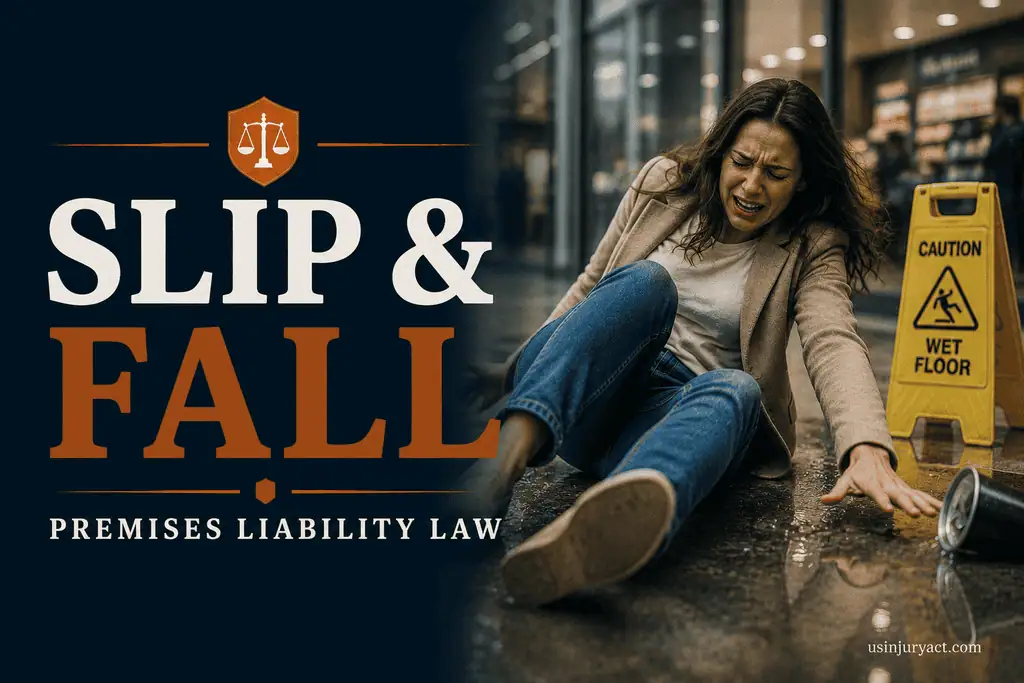
Slip and fall accidents are one of the leading causes of emergency room visits in the United States. According to the National Floor Safety Institute, falls account for over eight million hospital emergency room visits annually, making them the single leading cause of ER visits nationwide.
The Centers for Disease Control and Prevention reports that falls are also the leading cause of injury-related death among adults over 65. These are not minor incidents. They are serious events with serious consequences.
Beyond the physical toll, slip and fall injuries can trigger enormous financial strain. Medical bills can accumulate rapidly. Time away from work translates directly into lost income. Long-term rehabilitation, adaptive equipment, and ongoing medical care can push costs into six or even seven figures for severe injuries.
When that harm results from someone else’s negligence, the law provides a mechanism for victims to pursue fair compensation.
The legal framework governing these cases, known as premises liability law, imposes a duty on property owners and occupiers to maintain reasonably safe conditions for visitors. When that duty is breached and injury results, a personal injury slip and fall claim may be available.
But navigating this process is not simple. It requires timely action, thorough documentation, an understanding of state-specific rules, and in most cases, the guidance of an experienced personal injury attorney.
This article is a complete guide to slip and fall accidents and the law in the United States. It covers the legal foundations, the types of injuries involved, how claims are pursued, what compensation is available, and what practical steps victims should take.
And since slip and fall law USA varies significantly from state to state, this guide provides a national framework while encouraging readers to explore state-specific resources and consult qualified legal counsel.
Recommended: Dog Bite / Animal Attack
What Is a Slip and Fall Accident
Under U.S. premises liability law, a slip and fall accident refers to an incident in which a person slips, trips, or stumbles on someone else’s property due to a hazardous condition and suffers injury as a result. The legal significance of the event lies not just in the fall itself, but in the property owner’s responsibility to prevent it.
While the term slip and fall is commonly used in both everyday speech and legal contexts, attorneys and courts often use it interchangeably with trip and fall. The distinction is minor but worth understanding.
A slip occurs when a person loses traction underfoot, typically on a wet, oily, or otherwise slick surface. A trip occurs when a person catches their foot on an obstacle or uneven surface, disrupting their balance and causing them to fall. Both types of incidents fall under the broader umbrella of premises liability claims and are governed by the same legal principles.
What transforms a fall into a legally actionable event is the presence of a hazardous condition that the property owner knew about or should have known about and failed to address.
Accidental falls that result from a person’s own inattention or from a risk they willingly assumed are treated differently under the law. The focus in a slip and fall injury claim is squarely on the property owner’s conduct and whether they met their legal obligation to maintain safe conditions.
Common Causes of Slip and Fall Accidents
Hazardous conditions that lead to slip and fall accidents are as varied as the properties on which they occur. However, certain causes appear repeatedly in legal claims across the country.
Wet and Slippery Floors
Wet floor accidents are among the most commonly litigated slip and fall cases. Spilled liquids in grocery stores and restaurants, freshly mopped floors without warning signs, leaking refrigeration units, and rain or snow tracked indoors all create slippery surfaces that can cause serious falls. A property owner who fails to clean up a spill promptly or warn visitors of a wet surface may be liable for resulting injuries.
For instance:
A shopper in a supermarket slips on a puddle of cooking oil that leaked from a cracked container on the shelf. The puddle had been present for over an hour, as confirmed by a time-stamped surveillance video. The store’s failure to identify and clean up the hazard within a reasonable time, despite regular staff inspections, supports a finding of negligence.
Uneven Surfaces and Pavement. Cracked sidewalks, uneven flooring transitions, raised carpet edges, buckled tile, and broken asphalt are common culprits in trip and fall injuries. Municipal sidewalks and parking lots are particularly frequent sites of these accidents. Property owners who allow deteriorated surfaces to remain without repair or warning expose themselves to liability.
Poor Lighting
Inadequate lighting in hallways, stairwells, parking garages, and entryways prevents visitors from seeing hazards and navigating spaces safely. A burned-out light bulb in a stairwell that has gone unreplaced for weeks is a foreseeable safety hazard, and a property owner who fails to address it may be found negligent when a visitor falls as a result.
Broken Stairs and Defective Railing
Stairs with missing or broken handrails, uneven riser heights, worn treads, or loose carpeting create dangerous conditions for anyone navigating them. These defects are especially dangerous for elderly visitors and can cause catastrophic falls resulting in severe fractures or traumatic injuries.
Icy Walkways and Winter Hazards
In states that experience cold winters, snow and ice accumulation on walkways, parking lots, and steps is a serious and recurring hazard. Property owners generally have a duty to clear snow and ice within a reasonable time and to apply de-icing materials in areas where accumulation is foreseeable. Failure to do so can result in liability for falls.
Loose Carpets, Rugs, and Flooring
A throw rug that slides on a hardwood floor, a carpet edge that has come loose from its tacking strip, or a section of flooring that has buckled can catch a visitor’s foot and send them to the ground without warning. These are precisely the types of conditions that routine property maintenance is designed to prevent.
Understanding Premises Liability in the United States
Slip and fall accident claims are governed by a body of law known as premises liability law. This framework establishes the legal relationship between property owners and occupiers on one hand and the people who enter their property on the other. At its heart, premises liability law holds that property owners are responsible for maintaining reasonably safe conditions and for warning visitors of known dangers that are not obvious.
The duty a property owner owes to any given visitor depends on the legal status of that visitor at the time of the incident. American law has traditionally recognized three categories of visitors, each associated with a different level of duty of care.
Invitees
An invitee is a person who enters a property with the owner’s express or implied invitation, typically for a purpose connected to the owner’s business. Customers in a store, patrons of a restaurant, guests at a hotel, and visitors to a public park are all examples of invitees.
Property owners owe invitees the highest duty of care. They must not only warn of known hazards but also conduct regular inspections to identify and address conditions that could pose a danger. The obligation is active, not passive.
Licensees
A licensee is a person who enters a property with the owner’s permission but for their own purpose rather than for the owner’s benefit. Social guests invited to a private home are the clearest example of licensees.
Property owners owe licensees a duty to warn of known hazards that the licensee is unlikely to discover on their own, but they are not required to inspect for unknown dangers. The standard is lower than for invitees but still meaningful.
Trespassers
A trespasser is a person who enters a property without permission or legal right. In general, property owners owe trespassers no duty of care and are not obligated to make their property safe for people who have no right to be there.
However, most states recognize an important exception for child trespassers under the attractive nuisance doctrine, which holds that property owners may be liable if a dangerous artificial condition, such as an unfenced swimming pool or accessible construction equipment, attracts children onto the property and causes them harm.
Elements Required to Prove a Slip and Fall Claim
To succeed in a slip and fall lawsuit in the United States, a plaintiff must establish four core legal elements. The failure to prove any one of them can defeat the entire claim regardless of how sympathetic the circumstances.
Duty of Care
The plaintiff must establish that the defendant owed them a legal duty of care. As discussed, this arises from the relationship between the property owner and the visitor, most commonly through the invitee relationship. In commercial settings, this element is rarely disputed. The dispute almost always centers on the other three elements.
Breach of Duty
The plaintiff must show that the property owner failed to meet the standard of care owed to them. This typically means proving that the owner knew or, through reasonable inspection, should have known about a dangerous condition and failed to remedy it or warn about it within a reasonable time. Courts evaluate this based on what a reasonably prudent property owner would have done under the same circumstances.
Causation
The plaintiff must demonstrate a direct causal link between the breach of duty and the injury suffered. The dangerous condition must be the proximate cause of the fall, and the fall must be the proximate cause of the injuries claimed.
Defense attorneys frequently argue that the fall resulted from the plaintiff’s own inattention rather than the hazardous condition, making causation one of the most contested elements in these cases.
Damages
The plaintiff must have suffered actual, quantifiable harm. This can be physical injury, financial loss, or both. Without genuine damages, even a clear breach of duty will not support a viable claim. Courts look for documented medical treatment, proven financial losses, and credible evidence of non-economic harm such as pain and suffering.
Real world example
a restaurant patron slips on a freshly mopped floor near the entrance. No wet floor sign was placed. She fractures her wrist and incurs $18,000 in medical costs. She can establish duty (she was an invitee), breach (failure to warn of a known wet surface), causation (the wet floor caused the fall which caused the fracture), and damages (documented medical expenses and lost income). All four elements are present, supporting a valid personal injury slip and fall claim.
Common Injuries in Slip and Fall Accidents
Slip and fall injuries span an enormous range of severity, from minor bruising to catastrophic, life-altering harm. The outcome of any given fall depends on factors including the height of the fall, the surface on which the person lands, the victim’s age and physical condition, and whether anything broke or cushioned the impact. The following categories represent the injuries most commonly seen in slip and fall accident claims.
Fractures and Broken Bones
Broken bones are among the most common serious injuries in slip and fall cases. The wrist, hip, ankle, arm, and kneecap are frequent fracture sites because these are the parts of the body that instinctively reach out or absorb impact during a fall. Hip fractures are particularly devastating, especially in older adults, because they often require surgical repair, extended hospitalization, and prolonged rehabilitation.
For elderly patients, a hip fracture can trigger a cascade of medical complications including blood clots, infections, and loss of independent mobility from which many never fully recover.
Head Injuries and Traumatic Brain Injury
When a person falls and strikes their head against the floor, a step, or a hard surface, the potential for traumatic brain injury (TBI) is significant. TBIs range from mild concussions with short-term symptoms to severe injuries involving permanent cognitive impairment, personality changes, loss of motor function, and the inability to return to work.
Even a mild TBI can produce symptoms including chronic headaches, memory problems, difficulty concentrating, and mood disorders that persist for months or years. These injuries are often underestimated in the immediate aftermath of a fall, which is one of the many reasons why prompt medical evaluation is so important.
Spinal Cord Injuries
Spinal cord damage resulting from a slip and fall can cause partial or complete paralysis, chronic pain, loss of bladder or bowel control, and a lifetime of medical dependency. The cervical spine, thoracic spine, and lumbar spine are all vulnerable in a serious fall. Even spinal injuries that do not involve the cord itself, such as herniated discs or vertebral fractures, can cause chronic, debilitating pain and substantially limit a person’s ability to work or perform daily activities.
Soft Tissue Injuries
Soft tissue injuries including sprains, strains, torn ligaments, and muscle tears are extremely common in slip and fall incidents. These injuries can be deceptively serious. A torn anterior cruciate ligament (ACL) in the knee or a severe rotator cuff tear in the shoulder may require surgery and extensive physical therapy, and may never fully resolve.
Insurance companies frequently attempt to minimize or dismiss soft tissue injury claims by characterizing them as minor or temporary, making thorough medical documentation critical.
Hip Injuries
Hip injuries deserve special attention given how disproportionately they affect older adults and how severe their long-term consequences can be. Beyond hip fractures, falls can cause significant damage to the cartilage, tendons, and bursa surrounding the hip joint.
Severe hip injuries frequently require joint replacement surgery, and recovery can take six months to a year or longer. For many elderly victims, a serious hip injury marks the beginning of a permanent decline in mobility and independence.
Where Slip and Fall Accidents Commonly Occur
Slip and fall accidents happen everywhere, but certain settings account for a disproportionate share of claims. The location of the accident matters legally because it shapes the duty of care owed and the identity of the responsible party.
Grocery Stores
Spilled liquids, wet produce areas, freshly cleaned floors, and slippery entrance mats make grocery stores common settings for fall injury compensation claims. These are commercial establishments, so customers are invitees and the highest standard of care applies.
Shopping Malls and Retail Stores
Polished tile floors, wet weather entrances, escalators, and crowded conditions create numerous fall hazards in retail environments. Large retailers often have robust legal teams and insurance carriers, making documentation from the moment of the accident especially important.
Restaurants and Bars
Spilled drinks, freshly cleaned floors, and poor lighting near dining areas and restrooms create hazardous conditions. Restaurants also frequently have uneven outdoor seating areas or improperly maintained access ramps that cause falls.
Workplaces
Workplace falls are covered by both workers’ compensation law and, in some cases, premises liability law. If a third party’s negligence contributed to the fall, a personal injury claim may be available in addition to a workers’ compensation claim. OSHA regulations add another layer of standards that may be relevant.
Sidewalks and Public Spaces
Falls on public sidewalks involve government entities as potential defendants, which introduces special rules including shorter notice periods and immunity protections. Many municipalities require formal written notice within 30 to 90 days of an accident before a lawsuit may be filed.
Private Homes and Rental Properties
Falls at private residences involve social guests as licensees. Landlords can face liability for common area hazards in rental properties. The duty of care standard is lower than in commercial settings, but valid claims do arise, particularly when a landlord knew of a dangerous condition and failed to address it.
How Slip and Fall Claims Work in the United States
Pursuing a slip and fall accident claim involves a series of steps that unfold over weeks, months, or sometimes years. The exact procedures vary by state, but the general framework is consistent across the country.
Seeking Medical Attention
The first and most important step after any slip and fall is to seek medical care immediately, even if injuries do not seem severe at first. Many serious injuries, including concussions and spinal damage, present with delayed or subtle symptoms.
Medical records from the day of the accident are foundational to any claim and establish a direct connection between the incident and the injuries.
Documenting the Accident
Before leaving the scene if it is safe to do so, the victim or someone helping them should photograph the hazardous condition, the surrounding area, and any visible injuries. Photographs of a wet floor without a warning sign, a broken stair, or an icy walkway can be powerful evidence that the hazard existed at the time of the fall.
Reporting the Incident
In commercial settings, report the accident to the manager or property owner immediately and request that an incident report be completed. Ask for a copy before leaving. This official documentation establishes a contemporaneous record of the event and is valuable in later proceedings.
Consulting a Personal Injury Lawyer
An experienced slip and fall attorney can evaluate whether a viable claim exists, identify all potentially liable parties, and advise on the legal steps that need to be taken. Most attorneys handle these cases on a contingency fee basis, meaning there is no upfront cost to the victim.
Investigation and Evidence Collection
The attorney will gather medical records, obtain surveillance footage before it is overwritten, interview witnesses, and retain expert witnesses if necessary. Preservation letters may be sent to the property owner early in the process to prevent the destruction of relevant evidence.
Filing a Claim
The attorney typically begins by filing an insurance claim with the property owner’s liability insurer. If the insurer denies the claim or offers an inadequate settlement, a formal lawsuit may be filed in court, subject to the state’s statute of limitations.
Negotiation with Insurance Companies
Insurance adjusters work to minimize payouts. The plaintiff’s attorney will negotiate on their behalf, using the evidence gathered to support the full value of the claim. The large majority of slip and fall cases are resolved through settlement at this stage.
Settlement or Trial
If a fair settlement is reached, the case concludes with the victim receiving compensation. If negotiations fail, the case proceeds to trial where a judge or jury determines liability and damages. Trials are relatively rare but sometimes necessary to achieve just results.
State-Specific Procedures Apply
The specific steps, deadlines, and procedural requirements differ significantly from state to state. Explore slip and fall laws in your state for jurisdiction-specific guidance, or consult a personal injury attorney in your state for advice tailored to your situation.
Evidence Needed to Win a Slip and Fall Case
The strength of a slip and fall injury claim depends heavily on the quality and completeness of the evidence. Insurance companies and defense attorneys scrutinize every detail, and a claim supported by strong documentation is far more likely to result in full and fair compensation than one that relies primarily on the victim’s recollection.
Incident Reports
The incident report prepared by the property owner or manager at the time of the accident is one of the most valuable pieces of evidence in a slip and fall case. It captures contemporaneous information about the condition that caused the fall, the circumstances of the incident, and the identity of witnesses. Always request a copy before leaving the scene.
Photographs and Videos
Visual documentation of the hazardous condition, the location, visible injuries, and the general environment is extremely persuasive. Take as many photos as possible from multiple angles. Note any absence of warning signs, barriers, or wet floor markers, as this can directly support a finding of negligence.
Witness Statements
Eyewitnesses who saw the fall or who can attest to the existence of the dangerous condition before the incident are invaluable. Gather names and contact information of any witnesses at the scene, as memories fade and people become difficult to locate over time.
Medical Records
All medical documentation related to the injury, from the initial emergency visit through ongoing treatment, surgery, physical therapy, and follow-up care, forms the backbone of the damages portion of the claim. These records establish what injuries were suffered, how they were caused, and what the ongoing impact has been.
Surveillance Footage
Security cameras in commercial properties often capture the moment of a fall and the condition of the area before and after the incident. This footage can conclusively prove the existence of a hazard, how long it had been present, and whether any staff noticed and failed to act. Surveillance footage is typically overwritten within days or weeks, making rapid legal action essential to preserving it.
Expert Testimony
In complex cases, expert witnesses may be retained to explain the nature of the hazardous condition, whether it represented a violation of industry safety standards, and how the fall caused the plaintiff’s specific injuries. Engineering experts, safety consultants, and medical professionals all play important roles in high-value cases.
Who Can Be Held Liable in a Slip and Fall Case
Identifying all potentially liable parties is a critical step in any premises liability United States claim. Liability does not always rest with a single party, and overlooking a responsible defendant can leave compensation on the table.
Property Owners
The property owner is the most common defendant in a slip and fall lawsuit. Whether the property is a private home, a commercial building, or an undeveloped lot, the owner is ultimately responsible for maintaining safe conditions. This obligation does not disappear simply because the owner is not physically present on the property or has delegated management responsibilities to others.
Business Owners and Tenants
In commercial settings, the business occupying a property may bear responsibility for maintaining the areas it controls, even if it does not own the building. A retail store that leases commercial space is responsible for keeping its sales floor, restrooms, and entrance areas safe for customers. Lease agreements often allocate maintenance responsibilities between landlords and tenants in ways that affect who can be held liable for a given accident.
Landlords
Landlords are responsible for common areas in multi-unit residential and commercial properties, such as hallways, stairwells, elevators, parking lots, and building entrances. A landlord who receives notice of a dangerous condition in a common area and fails to address it within a reasonable time may be found liable for injuries that result.
Some states extend landlord liability further, particularly in the context of habitability standards and statutory duties to maintain safe premises.
Property Management Companies
Third-party property management companies hired to maintain a property can be held directly liable for negligence in performing their management responsibilities, including failure to inspect, maintain, or repair dangerous conditions that fall within their contractual duties.
Government Entities
When a slip and fall occurs on public property, such as a city sidewalk, a state park, or a government building, the responsible government entity may be the defendant. However, suing a government entity involves navigating special rules.
Most states require the filing of a formal notice of claim within a very short period after the accident, sometimes as few as 30 to 90 days. Failure to comply with these notice requirements can permanently bar a claim.
Government entities also enjoy various levels of sovereign immunity and discretionary function exceptions that can limit or complicate recovery.
Shared and Multiple Liability
In many cases, more than one party bears responsibility for an unsafe condition. A shopping mall owner, an individual store tenant, and a third-party cleaning contractor could all bear some share of liability for a wet floor accident in a retail setting.
Identifying every potentially responsible party maximizes the available pool of compensation and ensures that no defendant escapes accountability for their share of the negligence.
Comparative Fault in Slip and Fall Cases
One of the most common defenses in slip and fall accident cases is that the victim was partly or wholly responsible for their own injury. This defense is formalized in a legal doctrine known as comparative negligence or comparative fault, which applies in most states and can significantly affect the outcome of a claim.
Under comparative negligence, a court assigns a percentage of fault to each party involved in an accident. If the plaintiff is found to share responsibility for their own fall, their total compensation may be reduced by their assigned percentage of fault.
For example, imagine a plaintiff awarded $100,000 in damages who is found to be 25 percent at fault for the accident because they were looking at their phone while walking. Under a comparative negligence rule, their recovery would be reduced to $75,000.
States differ in how they handle shared fault. The three main approaches are:
Pure Comparative Negligence
Pure comparative negligence, otherwise known as pure comparative fault means that the plaintiff may recover damages even if they are 99 percent at fault, though their recovery is reduced by their share of fault.
A small number of states, including California and New York, follow this approach.
Modified Comparative Negligence (50 Percent Bar Rule)
The plaintiff may recover damages only if they are less than 50 percent at fault. If the plaintiff’s fault equals or exceeds 50 percent, they recover nothing. This is the most common approach in the United States.
Modified Comparative Negligence (51 Percent Bar Rule)
Similar to the above, but the bar is set at 51 percent. The plaintiff may recover if they are 50 percent or less at fault but not if they are 51 percent or more at fault.
Here’s a detailed guide on the modified comparative faults and the state practicing it.
A small number of states still follow the traditional contributory negligence doctrine, under which a plaintiff who is even one percent at fault for an accident cannot recover any damages at all.
This harsh rule applies in only a handful of jurisdictions, including Virginia and Maryland, and makes it especially important to consult a local attorney when assessing a case in those states.
Compensation in Slip and Fall Cases
When a slip and fall claim succeeds, the compensation awarded is intended to address all of the losses the victim has suffered as a result of the accident. The damages you can recover fall into three broad categories.
Economic Damages
- Emergency medical treatment
- Hospitalization and surgery costs
- Physical therapy and rehabilitation
- Ongoing and future medical expenses
- Lost wages and income
- Loss of future earning capacity
- In-home care expenses
- Adaptive equipment and devices
Non-Economic Damages
- Physical pain and suffering
- Emotional distress and anxiety
- Loss of enjoyment of life
- Loss of consortium
- Permanent disfigurement or disability
- Post-traumatic stress disorder
- Sleep disturbances and depression
Punitive Damages
- Available for gross negligence or egregious conduct
- Require proof of recklessness or malice
- Rarely awarded in slip and fall cases
- May apply when safety violations are deliberate
- Subject to state-specific caps
Economic Damages in Depth
Economic damages are the most straightforward component of a fall injury compensation claim because they are anchored to verifiable financial losses. Medical bills, pay stubs documenting lost wages, and receipts for rehabilitation services all provide concrete evidence of what the victim has spent or lost as a direct result of the injury.
Future economic losses, such as the projected cost of lifetime medical care for a victim with a permanent disability or the reduction in lifetime earning capacity for a younger victim who can no longer perform their prior work, require testimony from economic and medical experts to properly quantify.
Non-Economic Damages in Depth
Non-economic damages are harder to quantify because they have no invoice or pay stub to attach to them. Pain and suffering, emotional distress, and the loss of activities that brought joy and meaning to a person’s life are real losses that deserve real compensation, but courts and juries must determine their monetary value based on the totality of the evidence.
Some states impose caps on non-economic damages in personal injury cases, which can limit recovery even in cases involving severe permanent harm.
Punitive Damages
Punitive damages are awarded in a very small proportion of slip and fall cases and only where the defendant’s conduct was extraordinarily reckless or deliberate. An example might involve a property manager who received repeated written warnings about a dangerous stairwell but took no action for months while continuing to collect rent.
Standard negligence, even serious negligence, does not typically rise to the level required for punitive damages.
Factors That Affect Settlement Value
Two slip and fall cases that appear similar on the surface can yield dramatically different settlement values depending on a range of case-specific and legal factors. Understanding these variables helps victims and their attorneys evaluate offers and negotiate effectively.
Severity and Permanence of the Injury
A case involving a traumatic brain injury, spinal damage, or a hip fracture requiring joint replacement will typically involve far larger economic and non-economic losses than one involving a soft tissue sprain. The more severe and permanent the injury, the greater the total damages and the higher the settlement value.
Long-Term Medical and Care Needs
Victims who require ongoing medical treatment, physical therapy, in-home care, or adaptive equipment for the remainder of their lives have substantially larger future economic losses than those who make a full recovery. These projected future costs must be carefully documented and presented by medical and economic experts.
Age and Occupation.
Younger victims with many working years ahead of them sustain larger lost-income claims than older individuals who are near retirement. A victim whose profession requires physical capabilities affected by the injury, such as a tradesperson, athlete, or nurse, may sustain particularly severe economic losses from a physical disability.
Strength of the Evidence
The clearer and more compelling the evidence of negligence, the stronger the plaintiff’s negotiating position. Surveillance video showing a hazard that existed for an extended period before the accident, combined with credible witness testimony and thorough medical records, creates a powerful case that insurers are less likely to contest aggressively.
Defendant’s Insurance Coverage
A property owner’s liability insurance policy limits establish a practical ceiling in most cases. Even when damages legally exceed those limits, collecting a judgment beyond the available insurance coverage can be practically difficult.
Applicable State Laws
Damage caps, comparative fault rules, statutes of limitations, and other state-specific legal standards can substantially affect the value of a claim. Identical facts can produce very different outcomes depending on which state’s law governs the case.
Pre-Existing Conditions
Defense attorneys routinely argue that a plaintiff’s injuries were caused by or significantly worsened by pre-existing conditions rather than the accident. A skilled plaintiff’s attorney can rebut these arguments by demonstrating the specific additional harm caused by the fall, but pre-existing conditions remain a complicating factor in many cases.
Slip and Fall Laws in the United States
As with medical malpractice and most other areas of personal injury law, slip and fall law USA is primarily state law. National principles provide a consistent framework, but the specific rules that govern any individual claim are determined by the state in which the accident occurred.
Statute of Limitations
Every state imposes a deadline within which a slip and fall lawsuit must be filed. Known as the statute of limitations, this period most commonly ranges from two to three years from the date of the accident, though some states set it shorter or longer.
The discovery rule in some states allows the limitations period to begin from the date the victim discovered or reasonably should have discovered their injury rather than from the date of the fall itself. Missing the deadline is fatal to a claim in virtually all circumstances: courts will dismiss a lawsuit filed even one day after the statute has expired, regardless of how strong the underlying evidence may be.
Notice Requirements
Some states require that property owners be given advance written notice of a claim before a lawsuit can proceed. Government entity claims almost always involve formal notice requirements with very short deadlines, sometimes as little as 30 days. Failing to provide required notice on time can permanently extinguish a valid claim, making early consultation with an attorney essential in any case involving government-owned property or public spaces.
Special Rules for Government Claims
Suing a government entity for a slip and fall on public property involves navigating a complex set of special rules. Sovereign immunity protections, which historically shielded governments from lawsuit, have been partially waived in most states but with significant limitations.
Government tort claims acts typically set shorter statutes of limitations, prescribe specific notice procedures, and may cap available damages. The procedural requirements for government claims are strict and unforgiving, and missing a single deadline can permanently bar recovery.
Role of Insurance Companies
Property owners and businesses carry general liability insurance precisely to cover claims arising from accidents on their premises. Insurance companies play a dominant role in the claims process. Their adjusters are trained professionals whose job is to settle claims for as little as possible.
They may contact accident victims quickly after an incident and request recorded statements or offer early lowball settlements before the full extent of injuries is known. Victims should be cautious about any communication with an insurance adjuster before consulting an attorney.
Challenges in Slip and Fall Cases
Slip and fall cases present a distinctive set of challenges that make them more complex to pursue successfully than many victims initially expect. Understanding these obstacles in advance allows plaintiffs and their attorneys to prepare more effectively.
Proving Negligence
Establishing that a property owner knew or should have known about the hazardous condition and failed to address it is the central challenge in most unsafe property conditions cases. Courts generally require evidence that the owner had either actual knowledge of the hazard or that the condition existed for long enough that a reasonable inspection would have discovered it.
This is often referred to as the notice requirement, and it is where many otherwise promising cases become difficult. An attorney with investigative resources and experience in these cases is well positioned to gather the evidence needed to meet this standard.
Lack of Evidence
Hazardous conditions are often corrected quickly after an accident. Surveillance footage is overwritten. Witnesses scatter. Incident reports go missing or are written in ways that minimize the property owner’s culpability. The window for gathering critical evidence is short, and victims who delay taking action may find that key evidence no longer exists by the time they consult an attorney.
Aggressive Insurance Defense
Insurance companies defending slip and fall claims deploy experienced adjusters and defense attorneys who are skilled at minimizing liability. Common defense tactics include arguing that the hazard was obvious and should have been avoided, suggesting that the plaintiff was distracted or wearing inappropriate footwear, disputing the severity or causation of the injuries, and using the plaintiff’s prior medical history to suggest that the injuries predate the accident.
A seasoned plaintiff’s attorney anticipates these defenses and builds a case designed to withstand them.
Legal Costs
While contingency fee arrangements mean that most slip and fall plaintiffs pay nothing upfront, the cost of litigation, including expert witnesses, deposition transcripts, court filing fees, and investigative expenses, can be substantial.
These costs are typically advanced by the plaintiff’s law firm and recovered from any settlement or verdict. In cases where liability or damages are limited, the economics of litigation may influence how aggressively a case is pursued and whether a settlement offer should be accepted.
Delays in Litigation
Even straightforward slip and fall cases can take one to three years from accident to resolution, and complex cases take longer. Court dockets are crowded, discovery takes time, and defendants and their insurers often have strategic reasons to delay resolution.
Victims dealing with ongoing medical challenges and financial strain during this period may feel pressure to accept early settlement offers that undervalue their claims.
What to Do Immediately After a Slip and Fall Accident
The steps taken in the hours and days immediately following a slip and fall accident can profoundly affect the outcome of any subsequent claim. Acting promptly and strategically preserves evidence, protects health, and establishes a credible record of the incident.
Seek Medical Attention Immediately
Go to an emergency room or urgent care clinic as soon as possible, even if you feel your injuries may be minor. Adrenaline and shock can mask symptoms. Many serious injuries, including concussions, internal bleeding, and spinal damage, present with delayed symptoms.
A prompt medical evaluation creates an official record linking your injuries to the accident, which is essential in any subsequent claim.
Report the Incident Before Leaving
Notify the property manager, store manager, or another responsible party about the accident before leaving. Request that a formal incident report be completed and ask for a copy. If a copy is unavailable, write down the names of the employees who were informed and the time the report was made.
Document Everything at the Scene
Use your phone to photograph the hazardous condition that caused the fall, including any wet floors, uneven surfaces, missing warning signs, poor lighting, or other contributing factors. Photograph the surrounding area, your injuries, and your clothing and footwear. Take multiple photos from different angles and distances.
Collect Witness Information
If anyone witnessed the fall or the hazardous condition, ask for their full name and contact information. Independent witness testimony can be decisive in establishing what happened and how the condition came to exist. Do not rely on the property owner to collect witness information on your behalf.
Avoid Making Statements to Insurance Adjusters
Do not give a recorded statement to the property owner’s insurance company without first consulting an attorney. Adjusters are skilled at asking questions in ways designed to elicit answers that minimize the property owner’s liability or reduce your damages.
A statement made in the first days after an accident, when the full extent of injuries may not yet be known, can be used against you later in the process.
Contact a Personal Injury Lawyer
Consult a slip and fall attorney as soon as possible. The statute of limitations begins running from the date of the accident, and evidence disappears quickly. An attorney can issue preservation letters to prevent the destruction of surveillance footage and other evidence, assess the viability of your claim, and guide you through the process from the very beginning. Most initial consultations are free.
How to Know If You Have a Valid Slip and Fall Case
Not every fall on someone else’s property gives rise to a valid legal claim. The presence of an injury, however serious, does not by itself establish liability. Understanding what distinguishes a legally viable premises liability United States claim from a situation that may not support a lawsuit helps victims make informed decisions about pursuing legal action.
Signs of a Strong Claim
- A clearly identifiable dangerous condition existed on the property, such as a wet floor, a broken step, or an icy walkway.
- The property owner knew or should have known about the condition based on how long it had existed or how frequently the area was used.
- No warning was provided, and the hazard was not obvious to a reasonable person exercising ordinary care.
- You sought medical treatment promptly after the fall, and your injuries are documented.
- An incident report was filed at the time of the accident, creating an official record.
- Witnesses were present or surveillance footage may have captured the hazard or the fall.
- The injuries caused significant medical expenses, lost income, or long-term limitations.
Situations That May Not Qualify
A fall on someone else’s property does not guarantee legal liability. If the hazard was obvious and easily avoidable by a reasonable person standard, the property owner may argue that no warning was necessary. If you were somewhere on the property you were not authorized to be, the duty of care owed to you may be significantly reduced.
If your injuries were minimal and you did not seek medical treatment, quantifying damages will be very difficult. And if the fall resulted primarily from your own inattention, such as looking at your phone or running in an area where walking is expected, comparative fault principles may significantly reduce or eliminate your recovery.
The Importance of Legal Evaluation
The only reliable way to assess whether you have a viable claim is to consult a qualified slip and fall attorney. Most offer free initial consultations and can give an honest appraisal of the strength of your case after reviewing the facts. Find a slip and fall lawyer near you to schedule a consultation as early as possible after an accident.
Choosing a Slip and Fall Lawyer
The quality of legal representation you obtain can profoundly affect the outcome of your slip and fall accident case. Not all personal injury attorneys have equal experience with premises liability claims, and the characteristics that define an effective slip and fall lawyer deserve careful consideration.
Experience in Premises Liability Law
Look for an attorney who focuses specifically on personal injury law and has a substantial history of handling slip and fall and premises liability cases. These cases require familiarity with property inspection standards, building codes, industry safety practices, and the procedural rules that govern premises liability claims. An attorney who handles primarily other types of cases may lack the specific expertise that these matters demand.
Track Record of Results
Ask about the attorney’s history of settlements and verdicts in slip and fall cases. A strong track record demonstrates both legal skill and the practical ability to achieve results for clients. An attorney with a reputation for trying cases, rather than always settling, often negotiates better settlements because insurance companies know the alternative is a trial.
Contingency Fee Structure
Most slip and fall attorneys represent plaintiffs on a contingency fee basis, meaning they receive a percentage of the settlement or verdict and nothing if the case is unsuccessful. This arrangement aligns the attorney’s financial interest with yours and makes legal representation accessible regardless of your current financial situation.
Clarify the fee percentage, how litigation expenses are handled, and whether any costs are charged in the event the case is not successful before signing a retainer agreement.
Access to Expert Resources
Successful slip and fall cases often require engineering experts to analyze property conditions, medical experts to establish the extent and causation of injuries, and economic experts to calculate future losses. Confirm that the attorney has established relationships with qualified experts and the resources to retain them when needed.
Communication and Personal Attention
Legal cases are stressful, and victims deserve an attorney who explains the process clearly, keeps them informed of developments, responds promptly to questions, and treats them with genuine respect and care.
During your initial consultation, assess whether the attorney listens carefully, explains clearly, and demonstrates real interest in your case. These qualities matter as much as technical skill in a process that may span two or more years of your life.
Slip and Fall Laws by State
While this guide has provided a comprehensive national overview of premises liability law and the slip and fall claims process, it is essential to understand that the specific rules governing your case are determined by the law of your state.
The variation across states is not merely technical; it can determine whether you are entitled to recover at all, how much you can receive, and what procedural steps you must follow.
State laws differ on the length of the statute of limitations for personal injury claims. They differ on whether comparative fault follows the pure, 50 percent, or 51 percent bar approach. They differ on notice requirements for government entity claims.
They differ on whether damage caps apply to non-economic losses. And they differ on the specific duty of care owed to different categories of visitors under premises liability doctrine.
A claim that would be viable in one state might be time-barred, capped, or significantly limited in value in another. This is why exploring your state-specific resources is not optional.
Slip and fall accidents are serious events that can upend lives in an instant. A wet floor in a grocery store, an icy walkway outside an apartment building, or a broken stair in a poorly maintained property can cause injuries that last for months, years, or a lifetime.
When those injuries result from a property owner’s failure to maintain safe conditions, the law provides a pathway for victims to pursue the accountability and compensation they deserve.
Premises liability law in the United States imposes a real and enforceable duty on property owners and occupiers to protect the people who enter their premises. When that duty is breached and harm results, a slip and fall accident claim under U.S. law can cover the full scope of a victim’s economic and non-economic losses, from mounting medical bills and lost income to the pain and diminished quality of life that serious injuries produce.
The path to compensation is not automatic. It requires prompt action to preserve evidence, a thorough understanding of state-specific legal requirements, and in virtually all cases, the guidance of a skilled personal injury attorney.
The challenges are real, from proving notice and causation to withstanding aggressive insurance defenses and navigating comparative fault rules. But with the right preparation and representation, victims of slip and fall accidents in the United States can and do achieve fair results.
The most important thing you can do after a slip and fall accident is act immediately. Seek medical care, document what happened, report the incident, and contact an attorney before evidence disappears or a legal deadline passes. Your rights are protected by law, but only if you take the steps needed to enforce them.