Negligence per se is one of the most powerful legal doctrines in American tort law. When a defendant violates a statute or regulation designed to protect the public, that violation can automatically establish one of the critical elements of a negligence claim, fundamentally shifting how a plaintiff builds and wins a case.
In ordinary negligence cases, a plaintiff must prove that the defendant failed to act as a reasonable person would under the circumstances. That standard is inherently subjective. Jurors weigh the facts, evaluate conduct, and reach conclusions that can go either way. Negligence per se removes much of that uncertainty by anchoring the analysis to a clear legal standard: the statute itself.
If a driver runs a red light and injures a pedestrian, the question is not whether a reasonable person would have stopped. The question is whether the driver violated the traffic statute. If the answer is yes, and the other required elements are met, the plaintiff has established breach of duty as a matter of law.
Negligence per se does not guarantee a win. It establishes one element of the claim. The plaintiff must still prove causation and actual damages. But it fundamentally strengthens the legal position of an injured party.
This guide covers everything you need to understand negligence per se from the ground up, including its legal definition, the elements required to establish it, real world examples, how it compares to ordinary negligence and strict liability, its application across different U.S. states, defenses available to defendants, and how attorneys use it in litigation.
What Is Negligence Per Se
The phrase negligence per se comes from Latin, meaning negligence in itself or negligence as a matter of law. In practical terms, it is a legal doctrine that allows a court to treat a defendant’s violation of a statute or regulation as automatic proof of negligence, at least with respect to the duty and breach elements of the tort.
Under standard negligence law, a plaintiff must establish four elements: duty, breach, causation, and damages. Proving breach, specifically that the defendant’s conduct fell below the standard of care owed to the plaintiff, often requires expert testimony, extensive evidence, and persuasive argument to a jury.
Negligence per se simplifies this process. When a defendant violates a law that was enacted to protect a specific class of people from a specific type of harm, and the plaintiff belongs to that protected class and suffered that type of harm, the breach of duty is established by the violation itself.
Negligence per se definition: A legal doctrine holding that a defendant’s violation of a statute or regulation constitutes negligence as a matter of law, provided the statute was designed to prevent the type of harm suffered and the plaintiff was within the class of persons the statute intended to protect.
This doctrine does not eliminate the need to prove causation and damages. Those elements remain squarely on the plaintiff’s shoulders. But by eliminating the need to litigate whether the conduct was reasonable, negligence per se can dramatically accelerate the path to liability.
Legal Foundation and the Doctrine in Tort Law
Origins in Common Law
The doctrine of negligence per se has deep roots in Anglo-American common law. Courts began applying it in the nineteenth century as legislatures began enacting safety regulations for railroads, workplaces, and public spaces.
Judges recognized that when a legislature declares certain conduct dangerous enough to prohibit by statute, it makes little sense to then ask a jury whether that same conduct was reasonable.
The doctrine rests on a straightforward logic. A legislature, representing the public interest, has already determined that a particular type of conduct poses unacceptable risk.
When a defendant engages in that conduct, the legislature’s judgment substitutes for the reasonable person standard in defining what duty requires.
The Restatement Approach
The Restatement (Second) of Torts, Section 286, articulates the conditions under which violation of a statute constitutes negligence per se.
The Restatement provides that a court may adopt a legislative enactment as the standard of conduct when the purpose of the enactment is to protect a class of persons that includes the plaintiff from the type of harm that the plaintiff suffered.
The Restatement (Third) of Torts refines this analysis further, distinguishing between statutes that create negligence per se and those that merely serve as evidence of unreasonable conduct.
Many states follow the Restatement framework, while others have developed their own variations through case law.
Federal and State Statutory Basis
Negligence per se can arise from violations of federal statutes, state statutes, local ordinances, and administrative regulations. The key is not the level of government that enacted the rule but rather the protective purpose of the rule and its applicability to the class of people that includes the plaintiff.
Courts examine the legislative history, the text of the statute, and the harm the law was designed to prevent when deciding whether a violation triggers negligence per se.
Elements of Negligence Per Se
To successfully invoke negligence per se, a plaintiff must establish four specific elements. Each element must be proven, and failure to establish any one of them means the doctrine does not apply.
Element 1: Violation of a Statute or Regulation
The starting point is proof that the defendant actually violated a law. This means showing that the defendant’s conduct did not conform to what the statute required or prohibited.
The violation must be clear and demonstrable, not speculative. Courts look at the specific requirements of the law and compare them to the defendant’s conduct.
Element 2: The Statute Was Designed to Prevent the Type of Harm Suffered
Not every statutory violation qualifies for negligence per se. The statute must have been enacted to protect against the type of harm the plaintiff experienced. This is a critical limiting principle that prevents the doctrine from being applied too broadly.
For example, a statute requiring vehicles to display working taillights is clearly designed to prevent rear-end collisions. If a driver operates a vehicle without working taillights and another driver rear-ends them at night, the taillight violation could establish negligence per se because the statute was designed to prevent exactly this type of harm.
However, if someone trips and falls on the same car with a broken taillight while walking past it in a parking lot, the taillight statute would not support negligence per se for that injury because the statute was not designed to prevent that type of harm.
Element 3: The Plaintiff Is Within the Class of Persons the Statute Was Designed to Protect
Statutes are enacted to protect specific groups of people. The plaintiff must fall within that protected class. A statute requiring commercial trucks to carry certain safety equipment is designed to protect other road users.
A pedestrian injured by a truck that violated that statute would likely be within the protected class. An employee of the trucking company who suffers an unrelated workplace injury may not be.
Courts analyze the statutory language and legislative history to determine who the legislature intended to protect.
Element 4: Causation and Damages
Even when the first three elements are satisfied, the plaintiff must still prove that the statutory violation actually caused the harm suffered and that the harm resulted in compensable damages.
This is where many negligence per se claims are won or lost even after the breach is established.
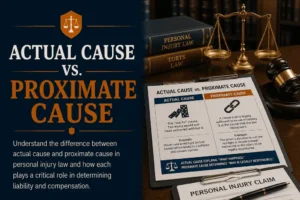
Causation analysis under negligence per se follows the same two-part test used in standard negligence: actual cause (but-for causation) and proximate cause (legal cause).
The plaintiff must show both that the harm would not have occurred but for the violation and that the harm was a foreseeable consequence of the type of risk the statute was designed to address.
Summary of Elements:
(1) Defendant violated a statute or regulation.
(2) The statute was designed to prevent the type of harm plaintiff suffered.
(3) Plaintiff belongs to the class of persons the statute was intended to protect.
(4) The violation caused plaintiff’s damages.
How Negligence Per Se Differs From Ordinary Negligence
The Reasonable Person Standard vs. Statutory Violation
In a standard negligence case, the central question is whether the defendant behaved as a reasonable person would under the same or similar circumstances. This standard is intentionaly flexible.
It allows courts and juries to consider the totality of the circumstances, including the defendant’s knowledge, the foreseeability of harm, the cost of precautions, and the severity of the potential injury.
Negligence per se replaces this flexible standard with a fixed legal benchmark. The statute defines what conduct is required. Deviation from that conduct is deviation from the legal standard, full stop.
There is no room for a jury to decide that the defendant, though technically in violation of the law, still acted reasonably.
Burden of Proof Differences
In ordinary negligence, the plaintiff bears the full burden of proving that the defendant’s conduct fell below the standard of care. This typically requires expert witnesses to testify about what reasonable conduct would have looked like and why the defendant’s conduct fell short.
Under negligence per se, once the plaintiff proves the violation and satisfies the other elements, the breach is established. The burden then shifts to the defendant to assert available defenses, such as impossibility of compliance or the applicability of an exception to the statute. T
Ths reversal of burden is one of the doctrine’s most significant practical advantages for plaintiffs.
Jury Instructions and Verdict Forms
In jurisdictions where negligence per se applies, judges instruct juries differently than in standard negligence cases. Instead of asking the jury to evaluate reasonableness, the judge instructs the jury that if they find the statutory violation occurred and the other elements are met, they must find breach of duty as a matter of law.
Negligence Per Se Examples: Real World Applications
Traffic Violations and Car Accidents
Traffic laws are the most commonly cited source of negligence per se in American personal injury litigation. Every state has enacted traffic statutes specifying speed limits, right of way rules, signal requirements, and safe following distances. These laws exist specifically to prevent collisions and protect road users.
When a driver runs a red light and strikes another vehicle, the driver has violated a traffic statute designed to prevent the exact type of intersection collision that occurred.
The injured occupants of the other vehicle are within the class of persons the traffic statute was designed to protect. If they can prove causation and damages, negligence per se is established.
Other common traffic-based examples include failure to yield, illegal U-turns that cause collisions, failure to stop at a school bus with lights activated, and driving on the wrong side of the road.
Driving Under the Influence
DUI laws provide some of the clearest examples of negligence per se in practice. Every state has statutes prohibiting operation of a motor vehicle while impaired by alcohol or drugs. These laws exist to protect other road users from the dangerous consequences of impaired driving.
When an intoxicated driver injures another person, the DUI violation can establish negligence per se with respect to the breach element. Plaintiffs in drunk driving cases routinely use this doctrine to streamline liability and focus the case on damages.
The DUI arrest, conviction, or even a documented blood alcohol content above the legal limit serves as powerful evidence of the statutory violation.
Building Code Violations
Building codes and fire safety regulations are enacted to protect occupants, workers, and visitors from structural failures, fires, and other hazards. When a property owner violates a building code and someone is injured as a result of that violation, negligence per se may apply.
For example, if a landlord fails to install required smoke detectors in a rental unit as mandated by local fire code, and a tenant is injured in a fire that spread because there was no smoke detector warning, the landlord’s violation of the fire code establishes breach of duty under negligence per se. The tenant is clearly within the class of persons the fire code was designed to protect, and the lack of early warning contributed directly to the harm.
Medical Scenarios and Licensing Requirements
State medical licensing statutes require that individuals practicing medicine hold valid licenses. These laws exist to protect patients from harm caused by unqualified practitioners.
When an unlicensed individual performs a medical procedure and injures a patient, the statutory violation can establish negligence per se.
In medical malpractice cases involving licensed physicians, other regulatory violations, such as improper prescribing practices, violations of informed consent statutes, or failure to report certain conditions as required by law, can also serve as the basis for negligence per se claims.
Product Safety Violations
Federal and state product safety regulations establish minimum safety standards for consumer goods. When a manufacturer sells a product that violates these standards and a consumer is injured by the defect the regulation was designed to prevent, negligence per se can apply alongside or in lieu of a strict product liability claim.
Here is an instance, federal regulations require that infant sleep products meet specific safety standards. If a manufacturer sells a product that violates those standards and an infant is injured, the regulatory violation can establish negligence per se, giving the plaintiff a strong foundation for the breach element of the claim.
When Negligence Per Se Applies: Qualifying Statutes and Regulations
Not every law or regulation qualifies as a basis for negligence per se. Courts apply a specific analytical framework to determine whether a particular statute can support the doctrine.
Protective vs. Revenue-Raising Statutes
Courts distinguish between statutes enacted to protect public safety and those enacted primarily for administrative or revenue purposes.
A statute requiring vehicles to be registered and fees paid is primarily a revenue and administrative measure. Its violation would generally not support negligence per se because the registration requirement was not designed to prevent a specific type of physical harm.
By contrast, a statute requiring seatbelts is a safety statute. It was enacted to reduce injuries in crashes. Its violation is more likely to support negligence per se in states that recognize it as such.
Federal, State, and Local Laws
Negligence per se can arise from violations at all levels of government.
Federal Occupational Safety and Health Administration regulations govern workplace safety.
State traffic codes govern road behavior.
Local fire codes govern building safety.
Any of these can support negligence per se if the specific violation meets the required elements.
When federal and state law both address the same subject, courts must determine whether federal law preempts state law application of negligence per se.
Preemption issues are particularly common in pharmaceutical litigation, where federal drug labeling requirements may preempt state law claims based on a different labeling standard.
Administrative Regulations
Administrative regulations issued by agencies pursuant to statutory authority can also support negligence per se. Courts examine whether the regulation has the force of law and whether it was designed to protect a specific class of persons from specific harm.
Regulations issued under clear statutory authority and published in official administrative codes generally meet this standard.
Defenses to Negligence Per Se
A defendant faced with a negligence per se claim is not without options. Several recognized defenses can defeat or limit the doctrine’s application.
Impossibility of Compliance
If compliance with the statute was physically impossible under the circumstances, the defendant may be excused from the violation. This defense requires a showing that the defendant could not have complied with the statute through any reasonable means. Courts apply this defense narrowly and will not accept impossibility claims that amount to mere inconvenience or difficulty.
Emergency Situations
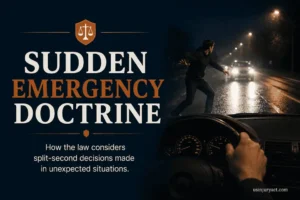
Courts recognize that emergencies can compel conduct that would otherwise violate a statute. If a driver swerves into the wrong lane to avoid hitting a child who darted into the road, that driver’s momentary traffic violation may be excused under the sudden emergency doctrine. The emergency must be sudden, not of the defendant’s making, and the response must be reasonable given the circumstances.
Greater Harm Avoidance
In rare cases, violating a statute may be the only way to prevent a greater harm. A driver who runs a red light at 2 a.m. to rush an unconscious passenger to the hospital might invoke this defense. Courts evaluate whether the defendant’s assessment of the competing harms was reasonable and whether the violation was truly necessary.
Ambiguity in the Statute
If the statute’s requirements are unclear or ambiguous, and the defendant made a reasonable interpretation that turned out to be incorrect, some courts will not apply negligence per se.
The statutory language must clearly impose the requirement the defendant allegedly violated. When a statute is genuinely susceptible to multiple reasonable interpretations, rigid application of negligence per se may be inappropriate.
Incapacity to Comply
A defendant who lacked the capacity to comply with a statute, such as a child who cannot be expected to understand and follow complex legal requirements, may be excused under certain circumstances. Courts are particularly sensitive to this defense in cases involving minor defendants.
State by State Differences: How Negligence Per Se Applies Across the U.S.
One of the most important things to understand about negligence per se is that its application varies significantly by jurisdiction. While the core doctrine is recognized in most states, how courts apply it, what effect they give it, and what defenses they allow differs widely.
Strict Application vs. Rebuttable Presumption
Most states treat negligence per se as creating a conclusive presumption of negligence with respect to breach of duty. If the elements are satisfied, the breach is established as a matter of law, and the defendant cannot rebut it by showing the conduct was otherwise reasonable.
Some states treat statutory violation as creating only a rebuttable presumption of negligence or as mere evidence of negligence. In these states, the defendant can present evidence to show that despite the violation, the conduct was reasonable under the circumstances. The jury then weighs that evidence and decides whether negligence has been established.
California
California follows the negligence per se doctrine through Evidence Code Section 669, which creates a presumption of negligence when a person violates a statute designed to protect against the risk of a particular injury and the violation proximately caused that injury to a person within the class the statute was intended to protect.
The presumption is rebuttable, allowing defendants to show the violation was reasonable under the circumstances, including that they used due care and the violation was beyond their control.
Texas
Texas applies negligence per se but limits its scope more narrowly than some other states. Texas courts require that the statute clearly impose a specific duty on the defendant for the plaintiff’s benefit.
The Texas Supreme Court has held that not every statutory violation constitutes negligence per se, and the courts carefully scrutinize whether the statute meets the protective purpose and class requirements. Texas also generally treats the doctrine as establishing negligence rather than merely evidence of it.
New York
New York applies negligence per se vigorously in traffic accident cases. New York Vehicle and Traffic Law violations are routinely used to establish breach of duty in personal injury litigation.
The courts have also extended the doctrine to a broad range of safety statutes, including labor law violations in construction accident cases, which is a heavily litigated area of New York personal injury law.
New York Labor Law Section 240, the scaffold law, creates a form of strict liability that operates similarly to negligence per se for elevation-related construction injuries.
Florida
Florida recognizes negligence per se and applies it to traffic violations, building code violations, and other safety statutes.
Florida courts have held that the doctrine eliminates the need for the plaintiff to prove the reasonableness standard through the reasonable person analysis, but the plaintiff must still prove that the violation was the proximate cause of the injury and that actual damages resulted.
Florida also requires that the statute have been designed to protect a class of persons that includes the plaintiff.
States with Limited Application
Some states limit the scope of negligence per se significantly. Virginia, for example, has historically been reluctant to extend the doctrine broadly and applies it only in specific, well-established categories.
Other states have limited its application through statutory reform or judicial decisions that favor the rebuttable presumption approach, giving defendants more latitude to contest the breach element even after a statutory violation is established.
Burden of Proof and Litigation Strategy
For Plaintiffs
Negligence per se is a strategic tool that plaintiffs and their attorneys should evaluate at the outset of every personal injury case. The first question is whether the defendant violated any statute or regulation. If so, the second question is whether that violation meets the elements required for the doctrine to apply.
When negligence per se applies, plaintiffs benefit from reduced discovery burden on the breach element, clearer jury instructions that favor the plaintiff, greater predictability in pretrial motions, and stronger settlement leverage because the defendant faces a more difficult liability defense.
Plaintiff attorneys should gather evidence of the statutory violation early, including police reports, regulatory inspection records, agency citations, photographs, and witness statements. Certified copies of the applicable statutes and regulations should be part of the trial record.
For Defense Attorneys
Defense attorneys must identify the negligence per se claim early and assess which defenses are available. The most common defensive strategies include challenging whether the statute meets the protective purpose requirement, arguing that the plaintiff is not within the class of protected persons, challenging causation even if breach is established, asserting specific defenses such as impossibility or emergency, and in appropriate jurisdictions, presenting evidence to rebut the presumption of negligence.
Defense attorneys should also explore whether the statutory violation is undisputed or whether there is genuine factual dispute about whether a violation occurred. If the violation itself is contestable, fighting on that front may prevent the doctrine from applying at all.
Settlement Leverage
Negligence per se dramatically affects settlement negotiations. When the doctrine applies, defendants face the prospect of having breach of duty established as a matter of law, leaving only causation and damages for the jury.
This significantly increases the litigation risk for defendants and provides plaintiffs with substantial leverage to obtain favorable settlements.
Insurance adjusters and defense counsel familiar with negligence per se understand its settlement implications. Cases where the doctrine clearly applies tend to resolve earlier and at higher values than equivalent cases where the plaintiff must fight through the full four element negligence analysis.
Role of Negligence Per Se in Major Personal Injury Case Categories
Car Accidents
Motor vehicle accident litigation is where negligence per se sees its most frequent application. Every state has a comprehensive traffic code that specifies hundreds of specific duties for drivers. When any of these duties is violated and the violation causes injury, the path to establishing breach of duty is clear.
Common traffic statute violations that support negligence per se in car accident cases include
- Over–speeding
- Failure to yield,
- DUI (Driving under influence)
- Distracted driving statutory violations
- Running red lights or stop signs
- Improper lane changes
- Failure to use headlights as required.
Workplace Injuries
OSHA regulations and state workplace safety laws establish specific requirements for employers and employees in virtually every industry.
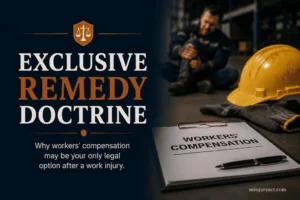
When an employer violates these regulations and a worker is injured as a result, negligence per se can be a powerful tool in any civil action outside of workers’ compensation, including third party claims.
Construction accident litigation frequently involves negligence per se based on OSHA safety standards for fall protection, scaffold safety, electrical safety, and hazardous materials handling. The detailed and specific nature of OSHA regulations makes them well suited to negligence per se analysis.
Premises Liability
Property owners and managers are subject to numerous safety codes, fire codes, and accessibility regulations. Violations of these requirements can establish negligence per se in slip and fall cases, fire injury cases, inadequate maintenance cases, and cases involving failure to provide code-required safety equipment.
For example, a property owner who fails to maintain required handrails on a staircase in violation of a building code, and whose tenant then falls due to the missing handrail, may face a negligence per se claim establishing breach of duty as a matter of law.
Negligence Per Se vs. Strict Liability vs. Ordinary Negligence: A Clear Comparison
These three liability doctrines are frequently confused or conflated. The comparison below clarifies how they differ in structure, proof requirements, and application.
| Factor | Negligence Per Se | Ordinary Negligence | Strict Liability |
| Duty Standard | Defined by statute | Reasonable person test | Imposed by law regardless of conduct |
| Breach Proof | Statutory violation = automatic breach | Must show unreasonable conduct | No breach element required |
| Causation | Required | Required | Required |
| Damages | Required | Required | Required |
| Defenses Available | Impossibility, emergency, ambiguity | Broad range of defenses | Very limited |
| Common Context | Traffic laws, safety codes | General accidents, slip and fall | Defective products, dangerous activities |
Negligence per se is not strict liability, even though they may appear similar in certain respects. Strict liability imposes responsibility regardless of the defendant’s state of mind or the reasonableness of their conduct.
It applies in specific categories such as abnormally dangerous activities and defective product design. Negligence per se still requires proof of causation and damages, and it is grounded in the defendant’s violation of a standard of conduct defined by statute.
The practical distinction matters. A defendant in a strict liability case cannot defeat liability by showing they acted reasonably or that compliance was impossible. A defendant in a negligence per se case can, in many jurisdictions, assert defenses based on reasonableness of the violation.
Recommended:
Common Mistakes and Misconceptions About Negligence Per Se
Misconception 1: Negligence Per Se Guarantees a Win
This is the most dangerous misconception in negligence per se law. The doctrine establishes breach of duty as a matter of law when its elements are met.
It does not establish liability. Causation and damages remain fully litigated issues. A plaintiff who proves a statutory violation but cannot connect that violation to specific, measurable harm will not win.
Defense attorneys often pivot hard to causation in negligence per se cases, accepting the statutory violation but attacking the link between the violation and the plaintiff’s claimed injuries. Medical evidence, accident reconstruction, and expert testimony about causation become the battleground.
Misconception 2: Any Statutory Violation Qualifies
Not every law that a defendant violated can serve as the basis for negligence per se. The statute must have been designed to protect against the specific type of harm the plaintiff suffered.
Courts regularly reject negligence per se arguments where the statute’s protective purpose does not align with the harm at issue. Plaintiffs and their attorneys must carefully analyze the statutory purpose before invoking the doctrine.
Misconception 3: The Doctrine Works the Same Everywhere
As discussed in the state by state section, the application of negligence per se varies significantly across jurisdictions.
Assuming that what works in California will work in Texas or New York is a mistake that can undermine an otherwise strong case. Jurisdiction-specific research is essential.
Misconception 4: Criminal Conviction Is Required
Some plaintiffs believe they must wait for a criminal conviction before asserting negligence per se in a civil case. This is incorrect. A statutory violation for negligence per se purposes does not require a criminal conviction or even a criminal charge.
The civil case operates independently of any criminal proceedings. Evidence of a traffic citation, regulatory citation, or simply proof that the conduct violated the statute’s requirements is sufficient.
How to Prove Negligence Per Se: A Step by Step Guide
Identify the applicable statute or regulation
Research every law or regulation that governed the defendant’s conduct in the context where the injury occurred. Consider federal laws, state statutes, and local ordinances
Confirm the defendant’s violation
Gather evidence proving that the defendant’s conduct did not conform to the statutory requirement. This may include police reports, inspection records, photographs, video footage, witness testimony, and regulatory agency finding
Establish the protective purpose of the statute
Research the legislative history and statutory text to confirm that the law was designed to protect against the type of harm the plaintiff suffered. If the legislative history is unclear, look at case law interpreting the statute’s purpos
Confirm the plaintiff’s membership in the protected class
Analyze who the statute was designed to protect and confirm that the plaintiff falls within that category. This analysis should be grounded in statutory text and case law.
Prove causation
Gather medical records, accident reconstruction reports, and expert opinions to establish that the statutory violation actually caused the plaintiff’s injuries.
Prepare to rebut any defense arguments that the violation did not cause the harm or that the harm would have occurred regardless.
Document and quantify damages
Compile evidence of all economic and non-economic damages, including medical expenses, lost wages, future medical costs, pain and suffering, and loss of enjoyment of life.
Prepare for defenses
Anticipate the defenses the defendant is likely to assert and prepare to rebut them with evidence and legal argument.
Case Law and Legal Precedents Shaping Negligence Per Se
Martin v. Herzog (1920)
This New York Court of Appeals decision, authored by Judge Benjamin Cardozo, remains one of the foundational negligence per se cases in American law.
The case involved a driver who failed to use headlights as required by statute and struck a horse-drawn buggy traveling in the center of the road. Cardozo held that the driver’s violation of the headlight statute was negligence per se.
The case established the principle that compliance with a safety statute is a minimum standard of conduct, not merely evidence of reasonable behavior.
Tedla v. Ellman (1939)
Also decided by the New York Court of Appeals, the Tedla v. Ellman case established an important limitation on negligence per se.
Two pedestrians were walking on the wrong side of the road, technically violating a traffic statute, but they were doing so to avoid heavy traffic on the other side.
The court declined to apply negligence per se because the plaintiffs’ conduct, though technically in violation of the statute, was actually consistent with the statute’s safety purpose under the specific circumstances.
Reyes v. Wyeth Laboratories (5th Cir. 1974)
This federal appellate decision addressed negligence per se in the context of pharmaceutical products. The court examined whether a vaccine manufacturer’s failure to comply with FDA warning requirements could establish negligence per se.
The case is frequently cited for its analysis of how federal regulatory violations interact with state tort law claims.
Broader Case Law Trends
Courts across the country have consistently applied negligence per se in highway safety cases, construction accident litigation, consumer product injury cases, and landlord tenant disputes involving building code violations.
The doctrine has also been applied in data privacy contexts, where violations of statutes like state data breach notification laws have been examined as potential bases for negligence per se, though this remains an evolving area of law.
Practical Application for Attorneys
Using Negligence Per Se in Claims
The moment a new case file lands on your desk, the negligence per se analysis should begin. Review the facts of the incident and identify every statute, regulation, or code that may have governed the defendant’s conduct including not just the obvious laws, such as traffic codes for accident cases, but also industry specific regulations, licensing requirements, and administrative rules.
Once you have identified the potentially applicable statutes, conduct a protective purpose analysis for each one. Research the statutory text, legislative history, and case law interpreting the statute in your jurisdiction. Confirm that your client falls within the protected class.
Build your negligence per se argument into the complaint from the beginning. Plead the statutory violations specifically, identify the statute by name and section number, and allege all required elements. Vague pleading of statutory violations can result in dismissal or limitation of the claim at the motion stage.
Defending Against Negligence Per Se
When defending a case where the plaintiff has asserted negligence per se, your first line of attack should be the statutory elements themselves.
Challenge whether the statute meets the protective purpose requirement as applied to this plaintiff’s specific harm. Challenge whether the plaintiff is truly within the protected class.
Even in jurisdictions where you cannot argue that the violation itself was reasonable, you can aggressively contest causation. A strong causation defense can defeat the entire claim even if negligence per se is established.
Work with medical experts, engineers, accident reconstructionists, and other specialists to build a case that the violation, whatever it was, did not cause this plaintiff’s injuries.
In states where the presumption of negligence is rebuttable, develop evidence of the contextual factors that made the violation reasonable or inevitable. Document the circumstances thoroughly and preserve all relevant evidence immediately.
Evidentiary and Procedural Tips
Always introduce certified copies of the applicable statutes and regulations into the trial record. Request judicial notice of the statutory provisions.
Prepare clear and simple jury instructions that explain the negligence per se doctrine in plain language. Work with your judge at the jury instruction conference to ensure the instructions accurately reflect the law in your jurisdiction.
Consider using summary judgment motions strategically. In cases where the statutory violation is undisputed and the elements of negligence per se are clearly met, a motion for partial summary judgment on the breach element can eliminate that issue from the trial and force the case to focus on causation and damages.
Frequently Asked Questions About Negligence Per Se
What is negligence per se in simple terms?
Negligence per se means that a person’s violation of a safety law automatically establishes that they were negligent, at least in terms of failing to meet their legal duty of care. You do not have to convince a jury that the person was unreasonable. The law already decided that their conduct was unacceptable by making it illegal.
Is negligence per se automatic liability?
No. Negligence per se establishes breach of duty as a matter of law, but it does not automatically result in liability. The plaintiff must still prove that the defendant’s violation actually caused the plaintiff’s harm and that the plaintiff suffered real, measurable damages. Many negligence per se cases are won or lost on causation, not on the statutory violation.
What must a plaintiff prove in a negligence per se case?
The plaintiff must prove four things: first, that the defendant violated a statute or regulation; second, that the statute was designed to prevent the type of harm the plaintiff suffered; third, that the plaintiff is within the class of persons the statute was designed to protect; and fourth, that the violation caused the plaintiff’s damages.
What are the most common negligence per se examples?
The most common examples include traffic law violations such as running red lights, speeding, or driving while intoxicated; building code and fire code violations that lead to injuries on property; violations of OSHA workplace safety regulations; medical licensing violations; and violations of consumer product safety regulations.
Does negligence per se apply in every state?
The doctrine is recognized in some form in the vast majority of states, but its application varies significantly. Some states treat it as a conclusive presumption, meaning the breach is established once the elements are met. Others treat it as a rebuttable presumption, allowing the defendant to show the conduct was reasonable despite the violation. A handful of states treat statutory violation only as evidence of negligence, not as establishing breach as a matter of law.
Can a defendant escape liability even if negligence per se applies?
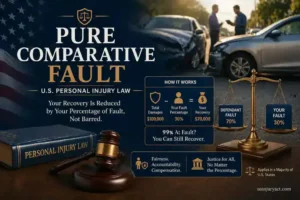
Yes, in several ways. The defendant can challenge causation, arguing the violation did not cause the plaintiff’s harm. The defendant can assert recognized defenses such as impossibility, emergency, or incapacity. In states with a rebuttable presumption approach, the defendant can present evidence that the violation was reasonable. And even where negligence per se is fully established, comparative negligence principles may reduce or eliminate recovery if the plaintiff was partly at fault.
How does negligence per se affect damages?
The doctrine does not directly affect the calculation of damages. Damages are determined by the nature and extent of the plaintiff’s injuries, not by how negligence was established. However, because negligence per se strengthens the liability case, it can increase settlement values and influence how damages are presented to a jury, as jurors who have already found a statutory violation may view damages more favorably for the plaintiff.