Personal injury law in North Carolina governs your right to seek compensation when someone else’s negligence causes you harm.
According to the North Carolina Department of Transportation, tens of thousands of motor vehicle crashes occur in the state every year, producing a steady volume of personal injury claims across every county courthouse.
What makes North Carolina stand apart is not the volume of claims but the legal framework that controls them. The state applies one of the harshest plaintiff liability rules in the entire country, operates a strict filing deadline under N.C. Gen. Stat. § 1-52, and allows damage caps in specific case types.
If you are dealing with an injury caused by someone else, understanding this framework before you act is not optional but essential. This guide covers every major aspect of personal injury law in North Carolina including the governing statutes, the claims process, recoverable damages, injury-specific rules, how local courts function, and how to choose qualified legal representation.
Read thoroughly before making any decisions.
Personal injury law is the body of civil law that allows an injured person to seek financial compensation from the party responsible for causing that injury. It is rooted in the legal concept of negligence, which requires proving that the defendant owed a duty of care to the plaintiff, breached that duty through action or inaction, directly caused the plaintiff’s injury as a result of that breach, and caused measurable damages as a consequence.
In North Carolina, these four elements form the foundation of virtually every personal injury claim. Duty of care can arise from many relationships: a driver owes a duty of reasonable care to others on the road, a property owner owes a duty to lawful visitors, a physician owes a duty to patients, and an employer owes a duty to maintain a safe workplace.
When that duty is violated and an injury results, the injured party has the right to pursue compensation through the civil court system or through a negotiated settlement.
North Carolina civil courts handle personal injury matters separately from criminal proceedings. Even if a defendant faces criminal charges arising from the same event, you may pursue your civil claim independently.
The burden of proof in civil court is preponderance of the evidence, meaning your case only needs to be more likely true than not. That standard is far lower than the criminal standard of beyond a reasonable doubt.
Before filing any North Carolina personal injury claim, you need to know the specific statutes and legal doctrines that will control your case. North Carolina has several rules that are notably strict and can eliminate your right to recover damages entirely if you are not careful.
The North Carolina statute of limitations personal injury deadline is established under N.C. Gen. Stat. § 1-52(16), which gives injured plaintiffs three years from the date of injury to file a lawsuit.
If you miss this deadline, the court will almost certainly dismiss your case, and you will lose the right to recover any compensation regardless of how strong your evidence is.
Wrongful death claims are subject to a shorter deadline. Under N.C. Gen. Stat. § 28A-18-2, the personal representative of the deceased’s estate must file within two years of the date of death.
This distinction matters enormously if an injury victim dies from their injuries days, weeks, or months after the initial incident.
The discovery rule applies in some cases, particularly those involving latent injuries or delayed diagnoses. Under this rule, the limitations clock may begin running when the plaintiff discovers or reasonably should have discovered the injury rather than on the actual date of the harmful act.
Medical malpractice cases also involve a separate statute of repose under N.C. Gen. Stat. § 1-15(c), which caps the filing window at four years from the date of the negligent act regardless of discovery.
Do not rely on these exceptions without consulting a North Carolina attorney.
North Carolina follows pure contributory negligence, which is one of only four states in the nation still applying this doctrine. Under the North Carolina contributory negligence rule, a plaintiff who is even one percent at fault for their own injury is completely barred from recovering any compensation from the other party.
This rule is not a technicality, it is the single most common reason valid personal injury claims fail in North Carolina. Insurance adjusters know this rule well and use it aggressively.
If an adjuster can build any argument that you contributed to your accident, they will try to use it to deny your claim entirely.
For context:
A driver runs a red light and strikes your vehicle. You were traveling five miles per hour above the speed limit at the time of impact. Even though the other driver bears the overwhelming majority of fault, an adjuster or defense attorney may argue that your speed contributed to the collision.
If a jury agrees and assigns you even one percent of the fault, you walk away with nothing. This is why the North Carolina contributory negligence rule demands that you protect your claim from the very first moment after an accident.
Avoid making recorded statements. Do not apologize or speculate about what you could have done differently. Speak with an attorney before giving any account to the opposing insurer.
North Carolina is an at-fault state, also called a tort liability state, for motor vehicle accidents. This means the party who caused the accident bears financial responsibility for the resulting injuries and property damage.
Unlike no-fault states where each driver’s own insurer covers their initial losses, North Carolina allows injured parties to file claims directly against the at-fault driver’s liability insurance or pursue a lawsuit against that driver personally.
North Carolina law requires all drivers to carry minimum liability insurance coverage. Before july 1st, 2025, minimum limits include at least $30,000 per person and $60,000 per accident for bodily injury, plus $25,000 for property damage.
But the North Carolina department of insurance wrote that from the 1st of july, 2025, the minimum limits for bodily injury will be increased to $50,000 per person, $100,000 per accident, with minimum limits for property damage being increased to $50,000 for all new or renewed policies
North Carolina does not impose a general cap on compensatory damages in most personal injury cases. Economic and non-economic damages in car accident, premises liability, and most other tort cases are not subject to statutory limits, meaning a jury can award whatever amount the evidence supports.
Medical malpractice is the primary exception. Under N.C. Gen. Stat. § 90-21.19, non-economic damages in medical malpractice cases are capped. This cap is adjusted periodically and applies to compensation for pain, suffering, emotional distress, and loss of consortium.
Economic damages such as medical expenses and lost wages remain uncapped even in malpractice cases.
Punitive damages are available in North Carolina under N.C. Gen. Stat. § 1D-25, but only when a plaintiff proves fraud, malice, or willful or wanton conduct.
Punitive damages are capped at the greater of three times the compensatory damages awarded or $250,000, whichever is higher.
Knowing how to file a personal injury lawsuit in North Carolina requires following a structured sequence of steps. Missteps at any stage can undermine your case even before it reaches a courtroom.
Your health comes first, and your medical records will become your most important evidence. Go to an emergency room, urgent care clinic, or your physician immediately after the accident.
Delayed treatment creates gaps that insurers exploit by arguing your injuries were not serious or were caused by something other than the accident. Follow all treatment plans and keep every appointment.
If you are physically able, document the scene thoroughly. Photograph the vehicles, the road conditions, any visible injuries, skid marks, and property damage.
Collect the names and contact information of every witness present. Request a copy of any police or incident report.
If you were injured on someone else’s property, note the exact location, lighting, and any hazardous conditions that contributed to your fall or injury.
You are required to notify your own insurer promptly after an accident, but you have no obligation to give a recorded statement to the opposing party’s insurer.
Report the claim, provide basic facts, but decline to discuss fault or the extent of your injuries until you have legal representation.
Anything you say can and will be used to reduce or deny your claim.
Given the complexity of North Carolina’s contributory negligence rules and the insurance industry’s tactics, speaking with a North Carolina personal injury attorney early in the process is critical.
Most personal injury attorneys offer a free initial consultation and work on a contingency fee basis which allow you pay nothing unless they recover compensation for you.
An attorney can evaluate liability, preserve evidence, handle all communications with insurers, and position your case for the strongest possible outcome.
The three-year statute of limitations under N.C. Gen. Stat. § 1-52 is absolute in most cases. If your claim involves a government entity such as a city, county, or state agency, different notice requirements apply and the timeline is shorter.
Claims against government entities often require filing a formal notice of claim within 90 to 180 days of the injury. Missing any of these deadlines permanently eliminates your right to pursue compensation.
North Carolina personal injury law recognizes three primary categories of compensation: economic damages, non-economic damages, and punitive damages.
The total value of your claim depends on the severity of your injuries, the strength of the liability evidence, and the specific category of harm involved.
Economic damages cover all measurable financial losses caused by the injury. These are quantifiable and typically proven through bills, pay stubs, tax records, and expert testimony. Common economic damages include:
Non-economic damages compensate you for losses that are real but not easily quantified in dollar terms. These are not capped in most personal injury cases in North Carolina, though medical malpractice cases are an exception.
Non-economic damages include physical pain and suffering, emotional distress and psychological trauma, loss of enjoyment of life, permanent disfigurement or disability, and loss of consortium experienced by a spouse.
Punitive damages are reserved for cases involving egregious conduct such as deliberate harm, fraud, or grossly reckless behavior. They are not available simply because the defendant was negligent. North Carolina caps punitive damages under N.C. Gen. Stat. § 1D-25 at the greater of three times the compensatory damages or $250,000.
They are relatively rare in standard personal injury cases but may be available in cases involving drunk driving, intentional assaults, or products deliberately misrepresented as safe.
Car accident claims are the most common type of personal injury matter filed in North Carolina. Because the state uses an at-fault system, the at-fault driver’s liability insurance is the primary source of compensation. You may file a third-party claim against the at-fault driver’s insurer or a direct lawsuit if the insurer refuses a fair settlement.
North Carolina also requires insurers to offer uninsured motorist coverage, which protects you when the at-fault driver has no insurance or flees the scene.
The contributory negligence rule is especially dangerous in car accident claims because accident reconstructionists and insurance investigators are skilled at identifying any behavior that might shift partial blame to you.
Speeding slightly, changing lanes just before impact, or failing to observe a stop sign can all become contributory negligence arguments. Document everything and say nothing without legal counsel.
Property owners in North Carolina owe varying duties of care depending on the legal status of the visitor.
To win a slip and fall claim, you must show that the property owner knew or should have known about the dangerous condition and failed to act.
In slip and fall cases and other cases as well, time is critical. Surveillance footage gets overwritten, and incident reports get sanitized, so it’s always advisable to secure evidence quickly.
Most workplace injuries in North Carolina are handled through the state workers’ compensation system rather than through a personal injury lawsuit against your employer. The North Carolina Industrial Commission administers these claims. Workers’ compensation provides medical benefits and wage replacement but does not include compensation for pain and suffering.
However, if a third party, meaning someone other than your employer or a coworker, caused your workplace injury, you may be able to file a separate personal injury claim against that party.
Common examples include equipment manufacturers, negligent contractors on the job site, or delivery drivers who cause an accident while you are working.
Medical malpractice claims in North Carolina are among the most complex personal injury matters in the state. To bring a claim, you must generally file a Rule 9(j) certification with your complaint confirming that a qualified medical expert has reviewed the case and believes the care rendered fell below the applicable standard. Failure to include this certification results in automatic dismissal.
Damages in medical malpractice cases are subject to the non-economic cap under N.C. Gen. Stat. § 90-21.19. However, economic damages including future medical costs and lost income remain fully recoverable.
The statute of repose gives you no more than four years from the negligent act to file, regardless of when you discovered the harm, with limited exceptions for fraud or concealment.
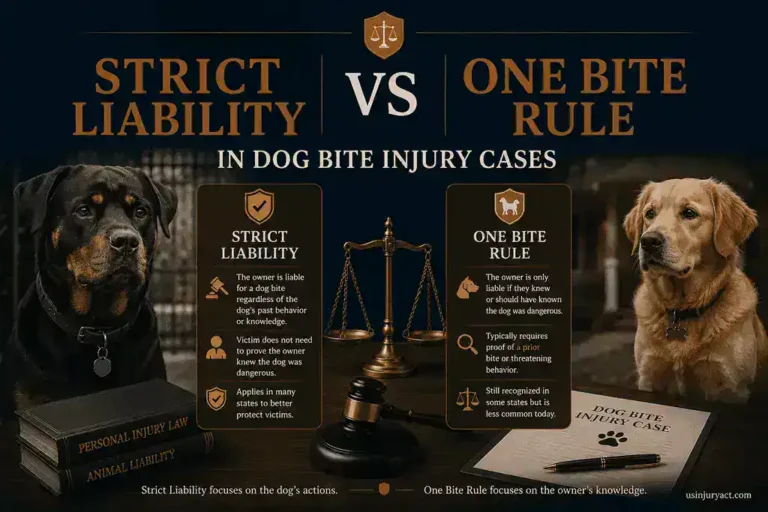
North Carolina applies a mixed liability approach to dog bite cases. Under N.C. Gen. Stat. § 67-4.4, a dog owner whose animal is designated as a dangerous dog or potentially dangerous dog is strictly liable for injuries that dog causes.
In other cases, the owner may be held liable if they knew or should have known the animal had dangerous tendencies. Evidence of prior aggressive behavior is a key factor in these claims. Local ordinances in cities like Charlotte and Raleigh may impose additional liability standards.
When a person dies due to someone else’s negligence, the personal representative of the estate may bring a wrongful death action from N.C. Gen. Stat. § 28A-18-2.
Recoverable damages in wrongful death cases include medical and funeral expenses, the decedent’s lost future earnings, the pain and suffering experienced before death, and loss of the decedent’s companionship and services to surviving family members.
The two-year statute of limitations for wrongful death runs from the date of death, not the date of the underlying injury.
North Carolina’s personal injury cases are not uniform across the state. Local court culture, jury composition, accident frequency, and judicial philosophy all influence how cases proceed and what outcomes look like in different cities.
Mecklenburg County Superior Court handles a high volume of personal injury cases given Charlotte’s size and status as the state’s largest city. The region’s extensive highway network, particularly I-85, I-77, and I-485, produces frequent and serious car accident claims.
Charlotte juries tend to reflect a commercially oriented urban community and have shown willingness to award meaningful damages in well-documented cases. The high population density also produces a greater number of premises liability and slip and fall claims, particularly in commercial districts like SouthPark and Uptown.
Wake County is home to Raleigh, one of the fastest-growing cities in the Southeast. Rapid population growth has brought increased traffic, construction zone accidents, and pedestrian injury incidents.
The Research Triangle draws highly educated residents who often serve on juries with a deliberate, analytical approach to evidence. Cases backed by strong expert testimony and clean documentary evidence tend to perform well in Wake County courtrooms.
Guilford County, which includes Greensboro, has a diverse economic base that includes logistics and manufacturing, both of which generate workplace injury and trucking accident claims.
Greensboro courts have historically produced conservative jury verdicts compared to Charlotte and Raleigh, which means case presentation strategy matters significantly.
Medical documentation and liability clarity are particularly important in this jurisdiction.
Durham County courts see a mix of urban and traffic-related personal injury claims. Durham’s proximity to major research institutions and hospitals also generates medical malpractice filings.
The county has a comparatively progressive jury pool by North Carolina standards, particularly for cases involving systemic institutional failures or clear corporate negligence.
Forsyth County encompasses Winston-Salem and has a moderate to conservative courtroom culture. Trucking and manufacturing accidents occur with regularity given the region’s industrial base.
Insurance defense counsel in this jurisdiction often employs aggressive contributory negligence strategies, which means it’s essential that plaintiffs have legal representation that can anticipate and counter these tactics before they gain traction with a jury.
Selecting the right North Carolina personal injury attorney is one of the most consequential decisions you will make in your case.
The attorney you hire will determine how aggressively your case is investigated, how effectively your damages are documented, and how skillfully your rights are defended against insurance industry tactics.
Nearly all personal injury attorneys in North Carolina work on a contingency fee agreement, which simply mean they receive a percentage of your settlement or verdict only if they win your case.
Contingency fees typically range from 33 percent for cases that settle before trial to 40 percent or more for cases that go to trial or require appeals.
You should receive a clear written agreement before any work begins. Ask specifically what expenses are deducted from your recovery and when, as some firms front litigation costs while others deduct them regardless of outcome.
Most reputable personal injury firms offer a free consultation with no obligation. Use this meeting to assess whether the attorney is genuinely knowledgeable about your specific case type.
Ask how many cases similar to yours they have handled, what their trial experience looks like, and how they communicate with clients throughout the process. Ask directly how they plan to counter the contributory negligence defense in your situation.
Be cautious of attorneys who promise specific dollar outcomes before fully reviewing your case. Settlement amounts depend on factors no attorney can predict with certainty at the intake stage.
Also avoid firms that operate on a high-volume, low-attention model and cannot clearly explain who will be handling your case day to day.
Referrals from settlement mills to outside counsel midway through a case are a sign of inadequate resources.
North Carolina’s court system varies meaningfully from county to county.
An attorney with established local relationships, familiarity with local judges’ procedural preferences, and knowledge of how local juries have responded to similar cases in the past brings practical advantages that out-of-state or large national firms simply cannot match.
Prioritize attorneys licensed and actively practicing in the specific county where your claim will be filed.
Personal injury law in North Carolina is built on principles that can work in your favor, but only if you act quickly, carefully, and with experienced legal guidance. The three-year statute of limitations gives you a window, but the state’s pure contributory negligence rule means that window can slam shut from the inside if you make any misstep in how you document the incident or communicate with insurers.
North Carolina is one of the most challenging states in the country for injured plaintiffs. Pure contributory negligence, strict procedural requirements for specific case types, and insurance industry tactics calibrated specifically for this legal environment all create real obstacles to recovery. These obstacles are not insurmountable, but they require knowledgeable, proactive legal representation to navigate effectively.
If you or someone you know has been injured through another party’s negligence, consult a licensed North Carolina personal injury attorney as soon as possible. A qualified attorney can evaluate your claim at no cost, preserve critical evidence before it disappears, and give you an honest assessment of your options.
Do not let the complexity of North Carolina’s legal system prevent you from pursuing the compensation you rightfully deserve.
Learn and Connect with the best injury attorneys based on specific injury type
Stay ahead with our resources on personal injury laws across the U.S.