According to the New York State Department of Health, more than 155,000 individuals suffer injuries severe enough to require hospitalization each year, while another 1.5 million injured New Yorkers are treated and released from emergency departments annually.
Behind every one of those numbers is a real person, a construction worker who fell from an unguarded scaffold in the Bronx, a pedestrian struck in a crosswalk on Flatbush Avenue, a shopper who slipped on an unmarked wet floor in a midtown Manhattan department store.
If you or someone you love has been hurt due to someone else’s negligence in New York, the path to compensation is not straightforward. New York has its own distinct legal framework that governs personal injury claims, including a no-fault insurance system, a serious injury threshold that can bar lawsuits, a pure comparative negligence rule, and strict notice requirements when suing government entities.
These laws can make or break a case, and they apply differently depending on where in New York your injury occurred.
This guide is the most complete, legally accurate resource available on personal injury law in New York. So if for instance you were hurt in a car accident in Queens, injured on the job in Manhattan, or attacked by a neighbor’s dog in Albany, what follows gives you the knowledge to protect your rights and get compensation.
Personal injury law, also called tort law, allows a person who has been harmed by another party’s negligence, recklessness, or intentional conduct to seek monetary compensation through the civil court system.
Unlike criminal law, which punishes wrongdoers on behalf of the state, personal injury law focuses on making the injured person financially whole.
At the heart of every personal injury case is the concept of negligence. To succeed in a claim, an injured person generally must prove four elements:
(1) the defendant owed them a duty of care
(2) the defendant breached that duty
(3) the breach caused the injury, and
(4) the injury resulted in measurable damages.
In New York, courts apply these elements within the framework of state statutes and decades of case law that have shaped exactly how each element is analyzed.
Duty of care is the legal obligation to act reasonably to avoid harming others. A driver owes a duty of care to everyone on the road. A property owner owes a duty to people who enter the premises. A doctor owes a duty to patients. When that duty is breached and injury follows, New York law provides avenues for recovery.
New York differs from many other states in important ways. Its no-fault auto insurance system limits who can sue after a car accident. Its scaffolding law imposes absolute liability on property owners and contractors in certain construction cases.
Its pure comparative fault rule allows even a mostly-at-fault plaintiff to recover something. Understanding these distinctions is essential before pursuing any claim.
New York’s personal injury legal landscape is shaped by several statutes and doctrines that do not exist, or operate very differently, in other states. Knowing these rules is not optional. Ignoring them can cost you your entire case.
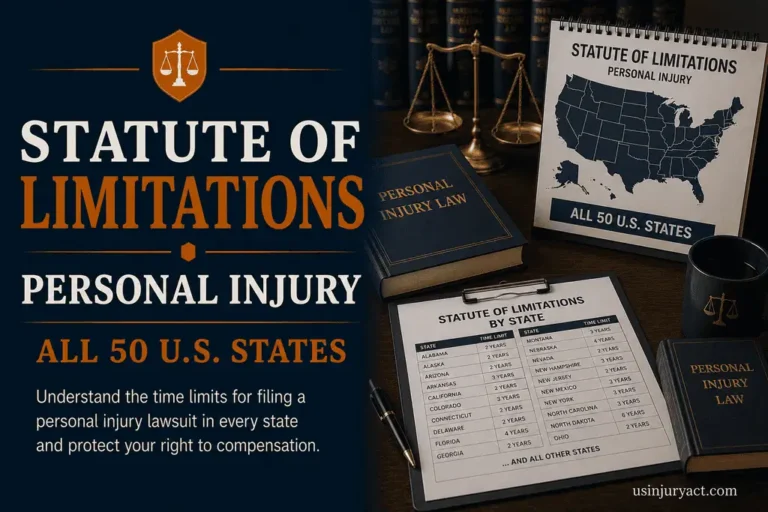
Under New York CPLR Section 214, most personal injury claims must be filed within three years of the date the injury occurred. Miss that deadline, and the court will almost certainly dismiss your case regardless of how strong it is.
But the three year window is not universal. Medical malpractice claims must be filed within two and a half years under CPLR 214-a, subject to the continuous treatment doctrine, which can toll the clock if you remain under the care of the same provider.
Wrongful death claims must be filed within two years of the date of death under EPTL 5-4.1.
Importantly, claims against New York City or any other government entity come with a shortened timeline. Under General Municipal Law Section 50-e, you must file a Notice of Claim within 90 days of the incident before you can even begin a lawsuit.
The lawsuit itself must then be commenced within one year and 90 days. This requirement catches many injured people off guard, especially those who delay consulting an attorney.
The discovery rule can apply in cases involving toxic exposure, latent diseases, or situations where the victim could not have reasonably known they were injured at the time. In those cases, the statute of limitations may begin running from the date the injury was or reasonably should have been discovered.
New York follows a pure comparative negligence system under CPLR Section 1411. This means that even if you were partially responsible for your own injury, you can still recover damages, but your compensation is reduced proportionally to your share of fault.
For example, if you were involved in a car accident on the FDR Drive and a jury determines that the other driver was 75 percent at fault and you were 25 percent at fault, you can still recover 75 percent of your total damages.
In a state with contributory negligence, even 1 percent fault on your part could bar recovery entirely. New York’s rule is significantly more plaintiff-friendly.
Defense attorneys frequently argue comparative fault to reduce their client’s liability exposure. An experienced New York personal injury attorney will be prepared to counter those arguments with evidence that clearly allocates fault to the responsible party.
New York is one of a minority of states that operates a no-fault auto insurance system. Under New York Insurance Law Article 51, commonly known as the No-Fault Law, every motor vehicle owner in New York must carry Personal Injury Protection (PIP) coverage with a minimum benefit of $50,000 per person.
After a car accident, your own PIP coverage pays for your medical bills and a portion of lost wages up to 80 percent of lost earnings, capped at $2,000 per month, regardless of who caused the accident. This happens quickly, outside of the court system, and without needing to prove anyone was at fault.
The tradeoff is that the no-fault system limits your ability to sue. Under the New York no-fault insurance law, you generally cannot bring a lawsuit for pain and suffering or other non-economic damages unless your injuries meet a specific threshold.
The New York serious injury threshold is defined under Insurance Law Section 5102(d). It is the gateway through which a car accident victim must pass before they can sue the at-fault driver for pain and suffering and other non-economic losses.
To qualify, the injured person must have suffered one of the following: death, dismemberment, significant disfigurement, a fracture, loss of a fetus, permanent loss of use of a body organ or limb, permanent consequential limitation of use of a body organ or member, significant limitation of use of a body function or system, or a medically determined injury or impairment of a non-permanent nature that prevents the person from performing substantially all of their customary daily activities for 90 of the 180 days following the accident.
Meeting the serious injury threshold in practice requires consistent medical documentation, objective diagnostic findings like MRIs or nerve conduction studies, and physician testimony linking the limitation to the accident.
Gaps in treatment are routinely used by defense attorneys and insurance companies to argue the injury is not serious under the statute.
Suing New York City, the MTA, the State of New York, or any other government entity follows different and more demanding rules than suing a private party.
The Notice of Claim requirement under General Municipal Law Section 50-e is mandatory, and the 90-day window begins running on the date of the accident or injury.
The Notice must include specific information: the nature of the claim, the time and place where it arose, and the damages alleged. A defective or untimely notice can be challenged by the government and may result in dismissal.
Courts have limited discretion to grant late notices, and those applications must be made before the statute of limitations expires.
These procedural hurdles make government entity claims among the most complex in New York personal injury practice.
Subway falls, sidewalk defects caused by city negligence, injuries in public parks, and collisions with government vehicles all fall into this category.
Knowing the legal rules is one thing. Understanding how to actually pursue a claim is another. The following steps outline what the process looks like from the moment of injury to the point of recovery.
Your health comes first. But from a legal perspective, prompt medical treatment is also the foundation of your case. Gaps in treatment, delayed diagnoses, and inconsistent records are among the most common reasons insurers deny claims or juries discount damages.
Seek treatment at a hospital emergency room, urgent care center, or with your primary physician as soon as possible. Follow up with specialists as directed. Every appointment, every diagnosis, and every treatment note becomes part of the medical record that will support your claim.
Photographs, videos, witness statements, and physical evidence can disappear quickly. If you were hurt in a car accident, photograph the vehicles, the scene, road conditions, and any visible injuries. If you slipped and fell, document the hazardous condition before it is repaired.
Obtain the names and contact information of witnesses. Request copies of police reports or incident reports. Preserve any clothing, footwear, or equipment involved. In premises liability cases, surveillance footage from stores or buildings may be overwritten within 30 to 72 hours, making early action critical.
If your injury resulted from a motor vehicle accident in New York, you must file a no-fault application with your own insurance carrier. This application must generally be submitted within 30 days of the accident. The insurer then has 30 business days to pay or deny each claim for treatment.
Even if you intend to pursue a lawsuit, filing your no-fault claim promptly ensures your medical bills are paid during the litigation process. Failure to comply with no-fault procedures can complicate your case and create unnecessary financial pressure.
Before speaking with any insurance adjuster, recorded statement, or defense representative, consult a qualified New York personal injury attorney. Insurance companies are experienced at minimizing payouts. What you say in the early days of a claim can and will be used against you.
A skilled attorney will evaluate whether your injuries meet the serious injury threshold, identify all liable parties, preserve evidence, handle communications with insurers, and advise you on the realistic value of your claim.
If settlement negotiations fail, your attorney will need to commence a lawsuit before the applicable statute of limitations expires. In New York, the lawsuit begins with the filing of a Summons and Complaint in Supreme Court or the appropriate venue. Proper service on the defendant is required within a specific timeframe after filing.
How to file a personal injury lawsuit in New York involves multiple procedural steps including pre-trial discovery, depositions, expert disclosures, motion practice, and potentially a jury trial. Understanding this process helps injured people make informed decisions about settlement versus trial.
Consider a concrete example. A Brooklyn resident is hit by a delivery van while crossing Atlantic Avenue. She files her no-fault claim within 30 days, sees an orthopedic surgeon who confirms a herniated disc with significant functional limitation, and retains a personal injury lawyer who sends a preservation letter to the delivery company demanding surveillance footage. That immediate, coordinated action preserves the case from the start.
Compensation in a New York personal injury case is broadly divided into economic damages, which cover out-of-pocket financial losses, and non-economic damages, which compensate for the more subjective human cost of an injury.
Economic damages are the calculable financial losses directly caused by the injury. They include past and future medical expenses such as hospitalzation, surgery, physical therapy, prescription medications, assistive devices, and home health care.
They also include past and future lost wages, diminished earning capacity if the injury permanently affects your ability to work, and out-of-pocket costs such as transportation to medical appointments.
In severe cases, economic damages can reach into the millions. A construction worker who suffers a traumatic brain injury from a scaffold collapse may face a lifetime of medical care and can never return to the workforce. Expert witnesses including economists, vocational rehabilitation specialists, and life care planners are routinely used to quantify these future losses.
Non-economic damages compensate for pain and suffering, emotional distress, loss of enjoyment of life, and the impact the injury has had on your relationships and daily activities.
These damages are not calculated from bills or pay stubs. They are assessed by juries based on the severity and permanence of the injury, the plaintiff’s age, and the overall impact on their life.
New York courts have historically produced some of the highest non-economic damage verdicts in the country, particularly in the Bronx and New York City generally.
However, these awards are subject to review, and judges have the authority to reduce a verdict they find excessive under the materially deviates from what would be reasonable compensation standard.
A spouse of a seriously injured person may bring a derivative claim for loss of consortium, which compensates for the loss of companionship, support, and intimate relations caused by the injury.
This claim belongs to the uninjured spouse and must be pursued alongside the primary personal injury action.
Punitive damages are awarded in rare cases where the defendant’s conduct was particularly egregious, malicious, or reckless in disregard for human safety. They are not intended to compensate the plaintiff but to punish the defendant and deter similar future conduct.
In New York personal injury cases, punitive damages are uncommon but have been awarded in cases involving drunk driving accidents, intentional assaults, and product liability claims involving knowing concealment of dangers.
In motor vehicle cases, the no-fault system covers basic economic loss up to $50,000. To recover for pain and suffering or economic damages exceeding that limit, you must first establish that your injuries meet the serious injury threshold as defined under Insurance Law Section 5102(d). If you do not meet the threshold, your recovery is largely confined to no-fault benefits regardless of how negligent the other driver was.
Different categories of personal injury cases are governed by distinct legal rules in New York. Understanding how the law applies to your specific type of injury is essential to building a strong claim.
Motor vehicle accidents are the most common source of personal injury claims in New York. The no-fault system is the starting point for any car accident case.
Your own PIP coverage pays your initial medical bills and lost wages. To access the at-fault driver’s liability coverage for pain and suffering, you must establish the serious injury threshold.
New York’s comparative negligence rule means that liability is rarely assigned to just one driver. Dash cam footage, accident reconstruction experts, and independent witnesses play a critical role in establishing what actually happened.
In rideshare accidents involving Uber or Lyft drivers, different insurance tiers apply depending on whether the driver was actively transporting a passenger.
Property owners in New York have a duty to maintain their premises in a reasonably safe condition and to warn visitors of known hazards. Under New York premises liability law, a slip and fall victim must generally prove that the owner knew or should have known about the dangerous condition and failed to remedy it.
The notice requirement is pivotal. For a store owner, constructive notice is established by showing that the condition existed for a sufficient amount of time that a reasonable inspection would have discovered it.
For a landlord, notice may come from prior complaints or previous similar accidents. Cases involving snow and ice are complicated by the so-called storm in progress rule, which can shield property owners from liability while precipitation is actively falling.
New York’s Labor Law imposes special protections for construction workers that go well beyond what federal OSHA requires. Three provisions stand out.
New York Labor Law Section 240, commonly called the Scaffolding Law, imposes absolute liability on property owners and general contractors when workers fall from heights or are struck by falling objects on a construction site. The worker does not need to prove the owner or contractor was negligent. Liability is automatic if proper safety equipment was not provided or was defective.
New York Labor Law Section 241(6) imposes liability when a construction worker is injured due to a violation of the Industrial Code, New York’s detailed set of construction safety regulations. Unlike Section 240, liability under 241(6) can be reduced by the worker’s comparative fault.
New York Labor Law Section 200 is a codification of the common law duty to provide a safe workplace. It applies to general negligence and hazardous site conditions, and does require proof that the defendant had notice and control over the dangerous condition.
Workers’ compensation benefits are also available for most workplace injuries, but they are the exclusive remedy against an employer. Labor Law claims are brought against the property owner or general contractor, which is a separate and often more valuable avenue of recovery.
Medical malpractice claims in New York are governed by CPLR 214-a, which generally allows two and a half years from the act of malpractice to file suit.
The continuous treatment doctrine tolls this period when the patient remains under the care of the same physician or practice for the condition related to the alleged malpractice.
New York requires a Certificate of Merit signed by a licensed physician before or with the filing of a malpractice complaint. This attests that the attorney has consulted with a medical expert who has reviewed the case and believes there is a reasonable basis to sue.
Medical malpractice cases are expensive and complex, requiring expert witnesses in every specialty involved and often taking years to litigate.
New York follows a one-bite rule with a significant modification. Under New York Agriculture and Markets Law Section 121, a dog owner is strictly liable for medical costs when their dog bites someone, regardless of whether the dog had previously shown any dangerous propensity.
However, for pain and suffering and other non-economic damages, the injured person must prove the owner knew or should have known the dog had vicious tendencies.
Evidence of prior aggressive behavior, complaints to animal control, or owner knowledge of the dog’s temperament are all relevant in establishing the negligence component of a dog bite claim beyond strict liability for medical bills.
When a person dies due to another’s negligence or wrongful act, New York’s Estates, Powers and Trusts Law (EPTL) Section 5-4.1 allows the decedent’s estate to bring a wrongful death action. Only a duly appointed personal representative of the estate may file, and the action must be commenced within two years of the date of death.
Recoverable wrongful death damages include the economic support the decedent would have provided to their distributees, medical and funeral expenses, and the reasonable value of services the decedent provided to the household.
Unlike many other states, New York’s wrongful death statute does not allow recovery for the family’s grief or emotional suffering, a limitation that has drawn significant criticism and ongoing legislative debate.
A separate survival action may accompany a wrongful death claim to recover for the conscious pain and suffering experienced by the decedent between the time of injury and death. Both actions are typically brought together by the estate’s personal representative.
Where your injury occurred within New York matters. Local court cultures, jury demographics, case volume, and community conditions all influence case outcomes. An attorney with deep local experience is not a luxury. It is a strategic advantage.
New York City handles an enormous volume of personal injury litigation, with thousands of cases filed annually in the five boroughs. The city’s dense traffic, aging infrastructure, heavy construction, and expansive public transit system create a uniquely high-risk environment.
Subway injuries, often involving platform accidents, train door malfunctions, or slip and falls on MTA property, follow special procedural rules and typically require a Notice of Claim against the MTA.
Manhattan juries tend to be diverse, educated, and not particularly sympathetic to large corporate defendants. Plaintiff-friendly verdicts are achievable in strong cases, but juries scrutinize credibility carefully.
The volume of litigation also means that insurance carriers and defense firms are highly experienced, making the quality of your legal representation critically important.
Brooklyn cases often involve premises liability arising from the borough’s mix of older residential buildings, commercial corridors, and public spaces. Landlord negligence, lead paint exposure, stairway collapses, and defective sidewalks account for a significant portion of personal injury claims.
Brooklyn juries are generally plaintiff-friendly but take individual credibility and medical documentation seriously.
Queens presents one of the most diverse jury pools in the country. Cases often involve traffic accidents along heavily traveled corridors, slip and falls in commercial properties, and workplace injuries in the borough’s manufacturing and warehouse sectors.
Queens juries tend to be practical and focused on concrete evidence rather than sympathetic narratives, making documentation and expert testimony particularly important.
The Bronx has historically returned some of the highest personal injury verdicts in the United States, a trend that has attracted national attention and shaped the litigation strategies of defense firms operating in the borough.
Plaintiff attorneys seek cases in the Bronx because favorable jury demographics and community experiences with institutional negligence have created a culture that is deeply receptive to accountability arguments.
Defense firms routinely attempt to change venue in Bronx cases for precisely that reason.
Personal injury litigation in upstate New York operates in a fundamentally different environment.
Rural juries tend to be more conservative, damages awards are generally lower than downstate, and community familiarity with local defendants can cut both ways.
Cases involving farm equipment, rural roadway accidents, and smaller municipalities are common.
Despite lower average verdicts, serious injuries in upstate counties still command significant compensation, particularly in cases involving clear liability.
The quality of your legal representation is one of the most important variables in any personal injury case. New York’s complex legal environment, aggressive insurance defense, and high litigation costs make this choice consequential.
Nearly all personal injury attorneys in New York represent clients on a contingency fee agreement, that means you pay nothing unless your attorney recovers money for you.
Under New York’s attorney fee schedule for personal injury cases, the standard contingency fee is structured as follows: 33 1/3 percent on the first $500,000 recovered, 30 percent on the next $250,000, 25 percent on the next $250,000, 20 percent on the next $250,000, and 15 percent on any amount exceeding $1,250,000.
This sliding scale was codified to protect injured people from excessive fees while ensuring attorneys are adequately compensated for the risk they take on.
Always review your contingency fee agreement carefully and ensure you understand what expenses are deducted from the recovery and when.
Before retaining anyone, ask how many cases they have taken to trial in the past three years, what percentage of their cases involve the type of injury you sustained, whether they personally handle your case or delegate to junior associates, and what their honest assessment of your claim is.
A good attorney will give you a realistic evaluation, not an inflated promise.
Take advantage of a free consultation to assess not just the attorney’s knowledge but their communication style and responsiveness. You will be working with this person for months or years. Comfort and trust matter.
Insurance companies track which attorneys try cases and which ones settle. Attorneys with genuine trial experience and a record of courtroom verdicts command better settlements because insurers know they will not capitulate at the last moment.
Ask specifically whether the attorney you are meeting with, not their firm, has tried personal injury cases to verdict, and ask for examples.
Be wary of attorneys who guarantee specific outcomes, pressure you to settle quickly, are difficult to reach, or primarily advertise volume over quality. Law firms that sign up thousands of cases a year but have small litigation teams often lack the capacity to properly prepare each case for trial.
Personal injury law in New York is sophisticated, demanding, and unforgiving of procedural mistakes. The no-fault insurance system, the serious injury threshold, pure comparative negligence, and special rules for government entity claims create a legal environment that is unlike virtually any other state.
For instance, let’s say your case involves a car accident in Queens, a construction site fall in Manhattan, a medical error at a Brooklyn hospital, or a slip and fall in Albany, the outcome depends heavily on how quickly you act, how thoroughly your case is documented, and how skilled your legal representation is.
A serious injury can cost hundreds of thousands or millions of dollars in medical care, lost income, and lost quality of life. The insurance companies and defendants you will face have experienced legal teams whose job is to pay you as little as possible.
If you have been injured in New York due to someone else’s negligence, do not wait. Consult a licensed New York personal injury attorney as soon as possible, ideally within days of the incident. Most of them offers free consultation and charge no fee unless you recover.
Learn and Connect with the best injury attorneys based on specific injury type
Stay ahead with our resources on personal injury laws across the U.S.