KEY FACTS AT A GLANCE
| Fact | Figure | Note |
| Annual Dog Bites (U.S.) | 4.5M+ | per CDC data |
| Avg. Insurance Payout | $65,000+ | per Insurance Info. Institute |
| California Law | Strict Liability | No one-bite rule |
| Filing Deadline | 2 Years | Statute of limitations |
| Govt. Entity Claims | 6 Months | Shortened deadline |
Thousands of Angelenos are bitten, knocked down, or mauled by dogs every year, and most of them don’t know they have powerful legal rights under California law.
Dog bite claims in Los Angeles are not like other personal injury cases. The state’s strict liability statute removes one of the biggest legal obstacles victims face in other states, that means you do not need to prove the dog was dangerous or that the owner knew it might bite.
If a dog bites you in a public place or while you’re lawfully on private property, the owner is liable – full stop. This guide provides a quick, clear, honest breakdown of how these cases work, what your claim could be worth, and what a skilled L.A. dog bite lawyer does to maximize your recovery.
Peradventure you were bitten on a hiking trail in Griffith Park, knocked over on the Venice Boardwalk, or attacked while making a delivery in Koreatown, the same law applies to you.
Most states historically followed the “one-bite rule”, a doctrine that let dog owners off the hook the first time their dog bit someone, so long as the owner had no prior reason to believe the dog was dangerous.
California abolished this approach entirely. Under California Civil Code § 3342, dog owners in Los Angeles and throughout the state are strictly liable for damages when their dog bites someone regardless of whether the dog ever showed aggression before.
| California Civil Code § 3342(a) — The Controlling Statute
“The owner of any dog is liable for the damages suffered by any person who is bitten by the dog while in a public place or lawfully in a private place, including the property of the owner of the dog, regardless of the former viciousness of the dog or the owner’s knowledge of such viciousness.” Cal. Civ. Code § 3342(a) — California Legislature |
What this means in plain terms: A dog owner in Los Angeles cannot escape liability by saying “my dog never bit anyone before.” Once you establish that a dog bite occurred and you were lawfully present, liability is essentially established.
The only real dispute becomes: how much are your damages worth?
You are considered lawfully present on private property if you were invited there (even implicitly) or if you were there to perform a legal duty – most commonly mail carriers, delivery drivers, utility workers, and meter readers.
Los Angeles has a large volume of dog bite claims from gig economy delivery workers, including DoorDash and Amazon drivers, who are almost always considered lawful entrants.
| Key Distinction: Bites vs. Other Injuries
California’s strict liability statute applies specifically to bites. If a dog knocks you down, jumps on you, or causes injury without biting, you may still have a strong claim but it would be brought under general negligence principles rather than strict liability. An experienced L.A. dog bite lawyer can evaluate which theory (or both) applies to your situation. |
The most obvious defendant in a dog bite lawsuit is the dog’s owner. But Los Angeles cases often involve multiple potential defendants, and a skilled attorney will investigate every viable source of recovery:
Insurance is critical here. Most dog bite claims in L.A. are paid through homeowners’ insurance or renters’ insurance policies. Some high-value cases involve umbrella policies or commercial liability coverage.
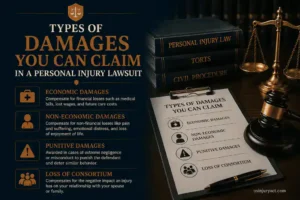
Dog bite injuries range from minor puncture wounds to catastrophic disfigurement requiring reconstructive surgery. The value of your claim reflects the full scope of harm you suffered and not just your medical bills. In California, dog bite victims may pursue three broad categories of damages:
| Type | Category | What’s Included | ||
| Economic | Medical Expenses | ER, surgery, hospitalization, plastic surgery, physical therapy, future care | ||
| Economic | Lost Income | Wages lost during recovery + reduced future earning capacity if injuries are permanent | ||
| Non-Economic | Pain & Suffering | Physical pain, emotional distress, PTSD, anxiety, and psychological trauma from the attack | ||
| Non-Economic | Disfigurement | Scarring, loss of function, permanent physical changes – especially compensable in L.A. courts | ||
| Non-Economic | Loss of Enjoyment | Inability to participate in activities, hobbies, and relationships you enjoyed before the attack | ||
| Punitive (Rare) | Punitive Damages | Available when owner conduct was malicious — e.g., knowingly allowing a vicious dog to roam free | ||
| The full value of a dog bite claim goes far beyond stitches and a doctor’s bill. Experienced L.A. attorneys document every layer of harm — including the psychological trauma that insurers routinely try to minimize. | ||||
Cases involving children carry higher values because courts and juries in Los Angeles respond strongly to injuries affecting minors.
Step 1: Seek immediate medical attention
Dog bites carry serious infection risk, including rabies, Capnocytophaga, and MRSA. Go to an ER or urgent care immediately both for your health and to create an official medical record that documents the injury at its worst.
Step 2: Document everything at the scene
Photograph your wounds before treatment if possible. Get the dog owner’s full name, address, phone, and insurance info. Take photos of the dog, the location, and any contributing factors (broken fence, loose chain, no leash). Get witnesses’ contact information.
Step 3: Report the bite to L.A. County Animal Control
Reporting creates an official government record and triggers an investigation. Animal Control will document the dog’s history, including any prior bites or complaints. This record becomes valuable evidence in your claim.
Step 4: Consult a Los Angeles dog bite lawyer
Most dog bite attorneys work on contingency which means no fee unless you win. An initial consultation is also usually free. The attorney will evaluate the strength of your case, identify all potential defendants and insurance policies, and begin preserving critical evidence.
Step 5: Claim investigation and evidence gathering
Your lawyer will obtain medical records, Animal Control reports, witness statements, surveillance footage, and social media evidence. They’ll also send a preservation letter to prevent the destruction of relevant evidence.
Step 6: Demand package and insurance negotiation
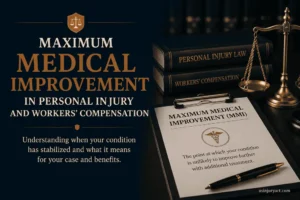
Once you’ve reached maximum medical improvement (MMI), your attorney submits a detailed demand package to the insurance company. This includes all medical records, bills, lost wage documentation, expert reports, and a narrative of your suffering.
Step 7: Settlement or litigation
The majority of L.A. dog bite claims settle without trial. If the insurer refuses to offer fair value, your attorney files a lawsuit in Los Angeles Superior Court. Most cases still settle during discovery or at mediation before trial.
You have two years from the date of the dog bite to file a personal injury lawsuit in California. Miss this deadline and your claim is almost certainly barred forever.
Important exception: if the defendant is a government entity (e.g., a police dog attack), a government tort claim must typically be filed within six months which is a much shorter window.
These are the factors that experienced L.A. attorneys look for when evaluating whether a case is likely to produce a strong recovery:
Los Angeles is one of the most litigation-intensive cities in the country, and the personal injury bar is enormous. Not every attorney has deep experience specifically with dog bite and animal attack cases. Here’s what to look for:
Ask specifically about dog bite experience, not just general personal injury. An attorney who primarily handles car accidents may not know how to locate homeowners’ insurance policies, subpoena Animal Control records, or retain the right experts for a bite wound case.
Virtually all dog bite cases in California are handled on contingency, typically 33% if settled before filing, 40% if the case goes to trial. You pay nothing unless you win. This structure aligns the attorney’s incentives with yours and makes legal representation accessible regardless of your financial situation.
L.A. Superior Court handles an enormous caseload. Attorneys with relationships in the courthouse, familiarity with local judges and mediators, and experience negotiating with major L.A.-area insurance adjusters have a real tactical advantage.
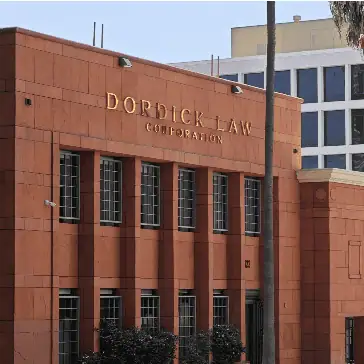
Dog Bite Lawyer in Los Angeles
Website: dordicklaw.com

Los Angeles County Dog Bite Lawyer
700 Flower Street, Suite 1000 Los Angeles, CA 90017
Los Angeles County Dog Bite Lawyer
Website: dogbitelawgroup.com
Yes. California’s strict liability law eliminates the one-bite rule. Prior viciousness is irrelevant. If the dog bit you while you were lawfully present, the owner is liable regardless of the dog’s history.
Don’t take their word for it. An attorney will independently verify whether a homeowners’ or renters’ policy exists, search for umbrella coverage, and investigate whether any other liable parties (landlords, property managers) have applicable insurance.
Yes. This is extremely common in Los Angeles. Delivery drivers are lawfully on private property when making deliveries. You may also be entitled to workers’ compensation through your employer, and you can pursue both simultaneously.
Yes. Minors cannot bring legal claims themselves, a parent or guardian must act on their behalf. Courts and juries in Los Angeles historically award higher damages in cases involving child victims, especially when facial injuries or psychological trauma are involved.
Straightforward cases sometimes settle within three to six months. Cases involving serious injuries, disputed liability, or multiple defendants can take one to two years or longer, particularly if litigation becomes necessary.
Dog bite attorneys in California work on a contingency fee basis. You pay nothing out of pocket. The lawyer’s fee comes out of the settlement or verdict at the end of the case. If you don’t recover, you owe nothing.
Technically, yes but it is rarely advisable. Insurance companies have experienced adjusters whose job is to settle claims for as little as possible. Unrepresented claimants consistently receive significantly lower settlements than those with legal representation.
Stay informed with personal injury laws, doctrines, and updates