
When you rent an apartment, house, or any residential unit, you have a reasonable expectation that the property will be safe to live in. If you suffer an injury on that rental property because your landlord neglected to fix a dangerous condition, you may have a strong legal claim for compensation.
The question of ‘can I sue my landlord for an injury on rental property’ comes down to several legal principles, the facts of your specific situation, and the laws of your state.
This blogpost explains when landlord liability arises, what legal duties your landlord owes you, how to build a compelling case, and the types of damages you can recover.
If you or someone you love was hurt on rental property, keep reading because the information here could protect everything you are entitled to.
The Legal Basis for Suing Your Landlord: Premises Liability and the Implied Warranty of Habitability
Two major legal theories support most landlord injury lawsuits. The first is premises liability, which holds property owners responsible for injuries caused by unreasonably dangerous conditions on their property.
The second is the implied warranty of habitability, a legal doctrine recognized in virtually every state that obligates landlords to maintain rental units in a livable and safe condition throughout the tenancy.
The implied warranty of habitability goes beyond just ensuring a working heater in winter. Courts have interpreted it to cover structural integrity, safe stairways, functioning plumbing, working locks, pest-free conditions, and adequate lighting in common areas.
A landlord who fails to maintain these conditions is not just breaching their contract with you; they are violating a legal duty that can expose them to substantial civil liability.
Most states have codified these obligations in landlord-tenant statutes, building codes, or housing codes. When a landlord violates a code provision that was designed to prevent the type of injury you suffered, courts often apply negligence per se.
Under this doctrine, the code violation itself constitutes evidence of negligence, removing the need for you to independently prove that the landlord’s conduct was unreasonable.
Common Injuries and the Negligence Behind Them
Landlord negligence takes many forms. The following types of defective conditions are among the most common triggers for tenant injury lawsuits.
Broken or Dangerous Stairs and Railings
Staircases are responsible for an enormous number of serious rental property injuries. A loose handrail, a broken step, insufficient lighting in a stairwell, or an uneven riser can send a tenant plummeting. Courts consistently find landlords liable for these conditions when the landlord had notice of the problem and failed to fix it within a reasonable time.
Notice is a critical concept in these cases. You can establish notice in two ways. Actual notice means the landlord knew about the defect, typically because you or another tenant told them in writing or verbally.
Constructive notice means the condition was so obvious or had existed for so long that a reasonable property owner should have discovered it through routine inspection.
Slip and Fall Accidents on Common Areas
Landlords are liable for maintaining common areas such as parking lots, hallways, lobbies, laundry rooms, sidewalks, and outdoor walkways. A wet floor in a lobby without a warning sign, an icy walkway left untreated after a storm, or a cracked sidewalk that has been ignored for months can all give rise to a valid injury claim against your landlord.
Lead Paint and Toxic Exposure
Federal law under the Residential Lead-Based Paint Hazard Reduction Act requires landlords of pre-1978 housing to disclose known lead paint hazards. If a child suffers lead poisoning in a rental unit because the landlord failed to disclose or remediate a known lead paint hazard, the landlord faces substantial civil liability, and in some cases, criminal penalties.
Mold exposure is another growing area of landlord liability. When a landlord knows about moisture intrusion or mold growth and fails to address it, tenants who suffer respiratory illness, allergic reactions, or other health consequences have successfully recovered damages in courts across the country.
Inadequate Security Leading to Criminal Attacks
Landlords are not insurers of their tenants’ safety, but they do have a duty to provide adequate security in areas with a foreseeable risk of criminal activity.
If a tenant is assaulted in a parking lot, stairwell, or lobby because the landlord failed to install or maintain proper lighting, working locks, or security cameras, the landlord may be held liable under a theory of negligent security.
Courts evaluating negligent security claims look at the history of criminal incidents in and around the property. If prior crimes were reported to management or documented in police records, foreseeability is easy to establish. The landlord who knew the environment was dangerous and took no steps to protect tenants created a condition the law will not excuse.
The Notice Requirement: A Common Defense and How to Overcome It
The most common defense raised by landlords in injury cases is lack of notice. Your landlord will claim they did not know about the dangerous condition and therefore cannot be held responsible. This is why documentation is everything.
Every request you make to your landlord about a repair should be made in writing, preferably by email or text so there is a time-stamped record. If you previously complained about a broken step, a flickering hallway light, a leaking roof, or a cracked walkway, that written record can be the most powerful piece of evidence in your entire case.
Even without a written complaint, courts have found constructive notice based on evidence that the defect was visible, ongoing, and plainly observable. Photographs showing rust, rot, accumulated water damage, or structural deterioration that would have been obvious during any routine inspection can establish constructive notice effectively.
What Damages Can You Recover When You Sue Your Landlord for an Injury
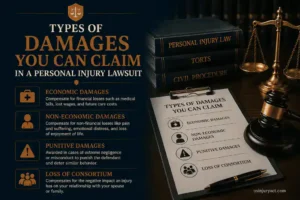
If you establish that your landlord was negligent and caused your injuries, you are entitled to compensation that covers all the losses flowing from that negligence. Courts recognize both economic and non-economic damages in landlord injury cases.
Economic damages include all medical expenses, from emergency room costs and surgeries to physical therapy, assistive devices, and future care needs. They also include lost wages for any time you missed work, and loss of future earning capacity if your injury has long-term effects on your ability to work.
Non-economic damages compensate you for pain and suffering, emotional distress, loss of consortium, and in severe cases, permanent disfigurement or disability. These damages are harder to quantify but are often the largest component of a serious personal injury award.
In cases involving particularly outrageous landlord conduct, such as a landlord who repeatedly ignored documented safety hazards for years, some courts have awarded punitive damages. Punitive damages go beyond compensation and are designed to punish the defendant and deter similar conduct by others.
Real-World Examples: When Landlord Liability Is Established
Scenario One:
A tenant in a Chicago apartment building trips on a broken bottom step of the interior staircase and tears her ACL. She had emailed the property management company three times over four months requesting the repair.
The company’s maintenance log shows the request was submitted but never assigned to a repair crew. A personal injury attorney secures records of all communication, the maintenance log, and an expert engineer’s inspection report. The case settles for a substantial sum before trial.
Scenario Two:
A child living in a Baltimore row house suffers developmental delays attributed to lead poisoning. The landlord, who owned the pre-1978 property, had received a housing inspector’s report two years earlier noting deteriorating lead paint on window sills.
The landlord did not remediate the hazard or disclose it as required by federal and state law. A lawsuit is filed naming the landlord individually and his LLC. The jury awards compensatory and punitive damages, noting the landlord’s deliberate disregard for a known danger affecting a child.
Scenario Three:
A tenant in a Miami apartment complex is mugged in the building’s underground parking garage at 10 p.m. The garage lights had been broken for over six weeks, and the electronic gate had been stuck open for a month. Police records show two prior robberies in the same structure.
The landlord had received at least one written complaint about the lighting from another tenant. The court finds the landlord liable under negligent security principles, holding that the combination of known prior crimes and ignored maintenance requests made criminal activity entirely foreseeable.
The Role of Lease Agreements and Liability Waivers
Some leases include clauses that attempt to limit or waive the landlord’s liability for injuries. You should know that courts in most states refuse to enforce these clauses when the injury results from the landlord’s own negligence.
Most states have specific statutes invalidating liability waivers in residential lease agreements as contrary to public policy.
Even if your lease contains language suggesting you agreed to hold the landlord harmless for any injuries, an attorney experienced in tenant injury cases can often defeat such provisions through statutory analysis, public policy arguments, and case law specific to your jurisdiction.
Renter’s Insurance and Your Landlord’s Insurance Policy
Your landlord likely carries a commercial property or landlord insurance policy. This coverage typically includes premises liability protection for injuries occurring on the property. Your claim will often be processed through this insurer, which will investigate, evaluate, and attempt to settle your claim on the landlord’s behalf.
It is critical to understand that the insurance company’s interests are not aligned with yours. Their adjusters are trained to minimize payouts. Never give a recorded statement to the landlord’s insurance company without first consulting a personal injury attorney. What you say in those early conversations can and will be used to reduce or deny your claim.
How Long Do You Have to Sue Your Landlord for an Injury
Statutes of limitations for personal injury claims against landlords follow general state tort law, which typically provides a two year window, though some states allow three years or longer. The clock generally begins running on the date of your injury.
Do not assume you have plenty of time because with time, evidence disappears and people who are present as witnesses forget details, and your landlord’s attorney will use every month of delay against you.
Filing promptly also preserves your ability to send a litigation hold notice that legally requires the landlord to preserve relevant records and surveillance footage.
Conclusion: Can I Sue My Landlord for an Injury on Rental Property
Yes, you can absolutely sue your landlord for an injury on rental property when their negligence created or allowed a dangerous condition to persist. The law places meaningful obligations on property owners and punishes those who put profit ahead of tenant safety.
Your path to recovery depends on proving that the landlord knew or should have known about the hazard, failed to fix it within a reasonable time, and that this failure caused your injuries and your losses.
The stronger your documentation, the stronger your case. Speak with a personal injury attorney in your state as soon as possible to protect your rights and maximize your recovery.